


Summer can be a challenging season for dogs. High temperatures, humidity, dehydration, and reduced appetite can affect their energy levels, digestion, and overall health. Just like humans, dogs need dietary adjustments during hot months to stay cool, hydrated, and nourished. That’s where summer superfoods for dogs come in.
Summer superfoods are natural, nutrient-dense foods that help regulate body temperature, boost hydration, support digestion, and strengthen immunity. In this detailed guide, you’ll learn what foods are best for dogs in summer, how to serve them safely, and how to build a balanced summer diet that keeps your dog happy and healthy.
Why Summer Nutrition Is Important for Dogs
Dogs regulate body heat primarily through panting and limited sweating through their paws. In summer, excessive heat can quickly lead to dehydration, lethargy, digestive upset, and even heatstroke. Many dogs also eat less during hot weather, increasing the risk of nutrient deficiencies.
A smart summer diet should:
- Increase hydration naturally
- Be light and easy to digest
- Provide vitamins and antioxidants
- Support gut health
- Prevent overheating and fatigue
Adding the right summer superfoods for dogs helps achieve all of this naturally.
What Are Summer Superfoods for Dogs?
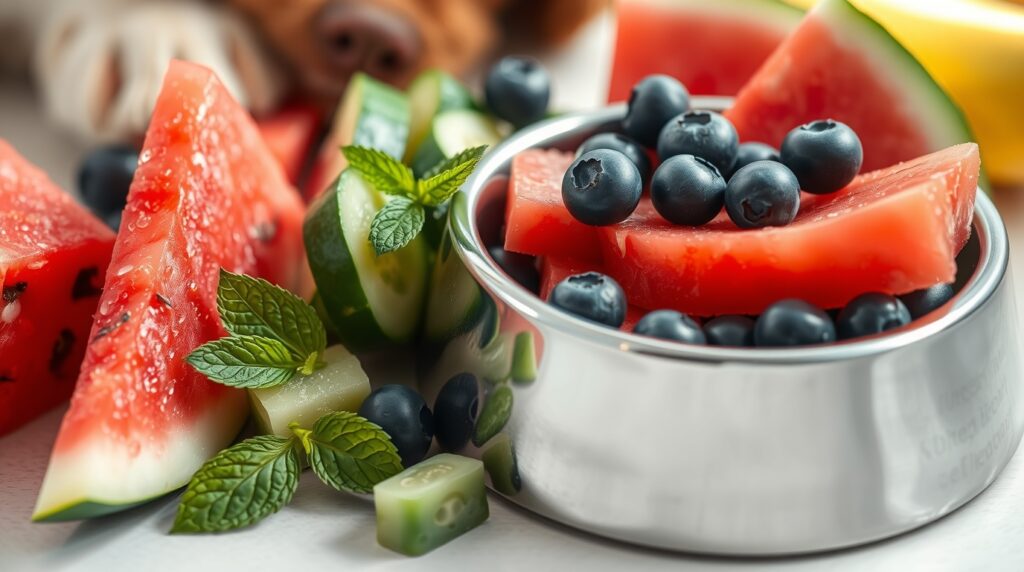
Superfoods are whole foods rich in essential nutrients like vitamins, minerals, antioxidants, fiber, and healthy fats. For dogs, superfoods support immune function, digestion, skin and coat health, joint strength, and overall vitality.
Summer-friendly superfoods are typically:
- High in water content
- Cooling in nature
- Low in fat
- Easy on the stomach
Hydration Comes First – The Foundation of Summer Dog Nutrition
Before discussing individual foods, hydration deserves special attention. Dogs need constant access to fresh, clean water in summer. However, hydration can also come from food.
Foods with high moisture content reduce the risk of dehydration and help regulate body temperature. This makes fruits and vegetables especially valuable in summer.
Top Summer Superfoods for Dogs
1. Watermelon – The Ultimate Summer Hydration Fruit
Watermelon is one of the best summer superfoods for dogs. It is over 90% water and packed with vitamins A, B6, and C.
Benefits:
- Keeps dogs hydrated
- Supports skin and coat health
- Low in calories
How to serve:
Remove seeds and rind, cut into small chunks, serve chilled (not frozen solid).
2. Cucumber – Cooling & Low-Calorie
Cucumbers are refreshing, crunchy, and extremely hydrating.
Benefits:
- Helps cool the body
- Supports weight management
- Aids digestion
Cucumber is ideal for overweight dogs or those with low summer appetite.
3. Coconut Water – Natural Electrolyte Booster
Plain, unsweetened coconut water can be a powerful summer hydration booster.
Benefits:
- Replenishes electrolytes
- Supports muscle and nerve function
- Helps after outdoor activity
Serve in small amounts and avoid flavored or sweetened versions.
4. Blueberries – Antioxidant Powerhouse
Blueberries are one of the best fruits dogs can eat in summer.
Benefits:
- Rich in antioxidants
- Supports immune health
- Improves brain function
They’re also perfect as training treats or frozen snacks.
5. Pumpkin – Digestive Superfood (Year-Round, Especially Summer)
While pumpkin is often associated with fall, it’s incredibly useful in summer.
Benefits:
- Regulates digestion
- Helps with diarrhea caused by heat
- Supports gut health
Use plain, cooked pumpkin with no spices or sugar.
6. Yogurt (Plain & Unsweetened) – Gut Health Support
Heat can disrupt gut bacteria, leading to loose stools.
Benefits:
- Contains probiotics
- Supports digestion
- Boosts immunity
Avoid flavored yogurt and dogs with lactose sensitivity.
7. Apples – Light, Crunchy & Nutritious
Apples are refreshing and packed with fiber and vitamin C.
Benefits:
- Supports digestion
- Helps clean teeth
- Low fat
Always remove seeds and core.
8. Carrots – Cooling Crunch for Summer Snacking
Carrots can be served raw, cooked, or frozen.
Benefits:
- Good for teeth
- Rich in beta-carotene
- Low calorie
Frozen carrot sticks can soothe teething dogs and cool them down.
9. Leafy Greens (Spinach, Kale in Small Amounts)
Leafy greens are nutrient-dense but should be served in moderation.
Benefits:
- Rich in iron and antioxidants
- Supports detoxification
- Boosts immunity
Lightly steam to improve digestibility.
10. Chia Seeds – Hydration & Omega-3 Boost
Soaked chia seeds form a gel that helps retain moisture.
Benefits:
- Supports hydration
- Improves skin and coat
- Aids digestion
Always soak before serving.
Best Protein Sources for Dogs in Summer
Heavy, fatty meats can feel uncomfortable in hot weather. Summer diets should include lean, easily digestible proteins.
Best options:
- Boiled chicken (skinless)
- Turkey
- Fish (salmon, sardines – cooked)
- Eggs (fully cooked)
Protein remains essential but should be balanced with hydration-rich foods.
Homemade Summer Dog Food Ideas Using Superfoods
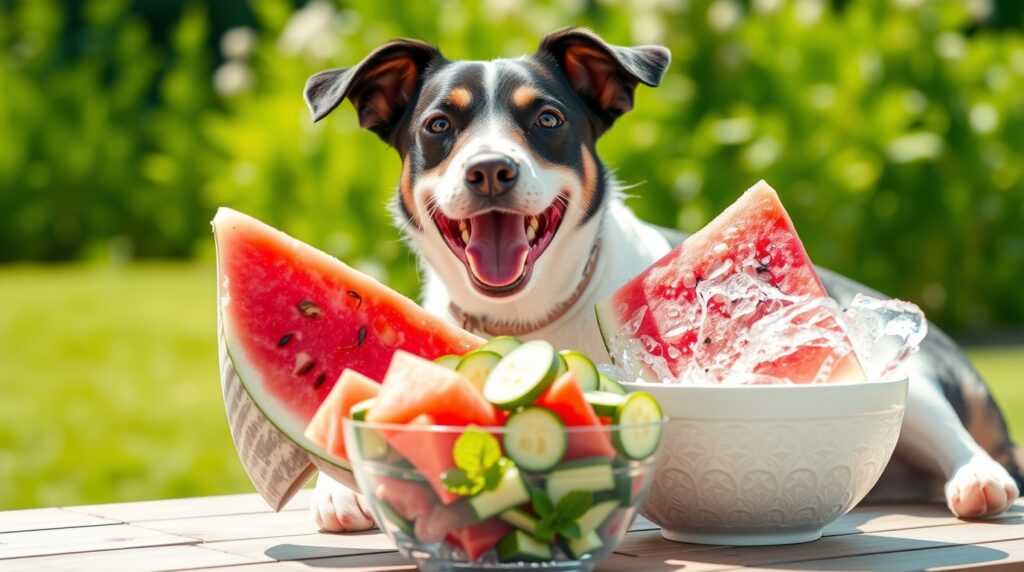
A balanced summer meal might include:
- Boiled chicken
- Cooked rice or sweet potato
- Pumpkin puree
- Cucumber or carrot
This type of homemade meal is light, nutritious, and easy on digestion.
Foods Dogs Should Avoid in Summer
Some foods worsen heat stress or cause dehydration.
Avoid:
- Chocolate
- Grapes and raisins
- Onions and garlic
- Ice cream with sugar
- Fatty leftovers
- Excessive salt
Never assume a “cool” human food is safe for dogs.
How Much Summer Superfood Should Dogs Eat?
Superfoods should complement, not replace, a balanced dog diet.
General rule:
- Treats and add-ons should not exceed 10–15% of daily calories
Signs Your Dog Needs Dietary Adjustment in Summer
Watch for:
- Reduced appetite
- Excessive panting
- Lethargy
- Diarrhea
- Dry gums
If symptoms persist, consult a veterinarian.
Summer Feeding Tips for Dogs
Feed during cooler times of the day (early morning and evening).
Avoid heavy meals before outdoor activity.
Add water or broth to food for hydration.
Use frozen treats in moderation.
Keep food fresh and avoid leaving it out too long.
Can Puppies and Senior Dogs Eat Summer Superfoods?
Yes, but portions and preparation matter.
Puppies:
Soft, finely chopped foods, small portions.
Senior dogs:
Easy-to-chew foods, lower fat, higher hydration.
Are Commercial Summer Dog Foods Necessary?
Not always. While some commercial “summer formulas” exist, most dogs do just fine with minor dietary adjustments and the addition of natural superfoods.
Whole foods offer freshness, hydration, and transparency that many commercial diets lack.
Conclusion:
Summer can be tough on dogs, but the right nutrition makes a huge difference. Adding summer superfoods for dogs like watermelon, cucumber, pumpkin, blueberries, yogurt, and lean proteins helps regulate body temperature, improve hydration, and support digestion during hot months. These natural foods are easy to prepare, affordable, and packed with health benefits.
A smart summer diet focuses on hydration, light meals, and nutrient-dense ingredients. By making small, thoughtful changes, you can keep your dog energetic, comfortable, and healthy all summer long.
Also Read:
- Printable Puppy Feeding Chart – Complete Guide by Age, Weight & Breed
- Printable Cat Feeding Schedule – Complete Daily Routine