

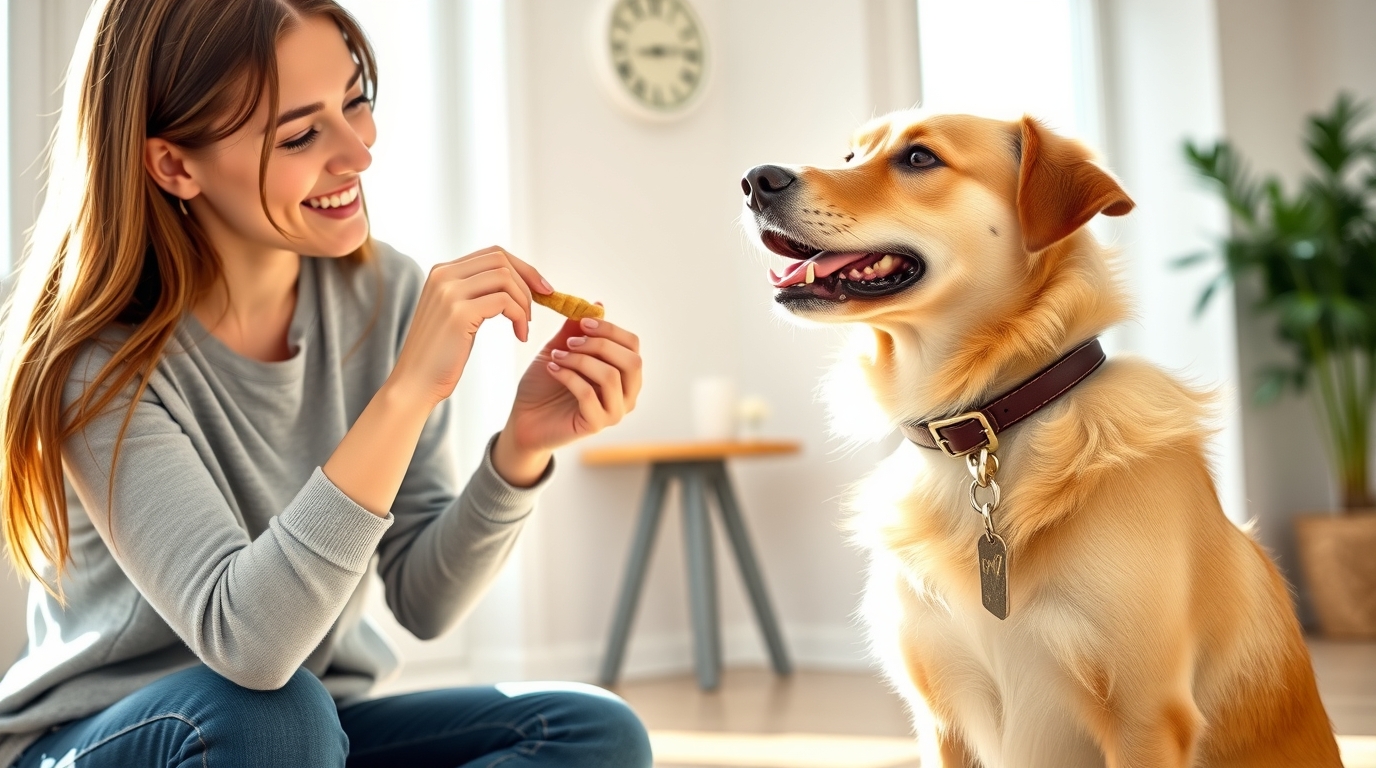
Bringing a dog into your life is exciting. But let’s be honest ,it can also feel overwhelming. Chewed shoes. Accidents on the carpet. Non-stop barking. Sound familiar?
Here’s the truth: training isn’t about controlling your dog. It’s about communication. Think of it as learning a new language — one that builds trust, structure, and harmony between you and your furry companion.
Let’s break it down step by step.
Why Dog Training Is Essential for Every New Owner

The Link Between Training and Behavior
Dogs aren’t “bad.” They’re confused. When they jump, bark, or chew, they’re responding to instincts or unclear boundaries. Training provides clarity. It tells your dog, “This is what I expect.”
Without training, dogs create their own rules. And trust me ,you probably won’t like them.
Building Trust and Communication
Training strengthens your bond. When your dog understands what you want and earns rewards for it, confidence grows. And a confident dog is a calm dog.
Understanding How Dogs Learn
Positive Reinforcement Explained
Dogs repeat behaviors that are rewarded. It’s that simple.
When your dog sits and you reward them with praise or a treat, they associate sitting with something good. Over time, that behavior becomes automatic.
Reward-based training works faster, builds trust, and reduces fear.
Timing and Consistency Matter
Rewards must happen within seconds. If you reward too late, your dog won’t connect the dots.
Consistency is equally important. If jumping is sometimes allowed and sometimes punished, your dog gets mixed signals.
Why Punishment Fails
Punishment might stop a behavior temporarily, but it creates fear and confusion. Fear damages trust. And without trust, training collapses.
Preparing for Training Success

Essential Training Tools
You don’t need fancy gadgets. Just:
- High-value treats
- A comfortable leash
- A collar or harness
- A crate (optional but helpful)
- Patience
That’s it.
Creating a Distraction-Free Environment
Start in a quiet room. Gradually increase distractions as your dog improves. Think of it like learning math ,you start with basics before taking the final exam.
Basic Commands Every Dog Should Learn
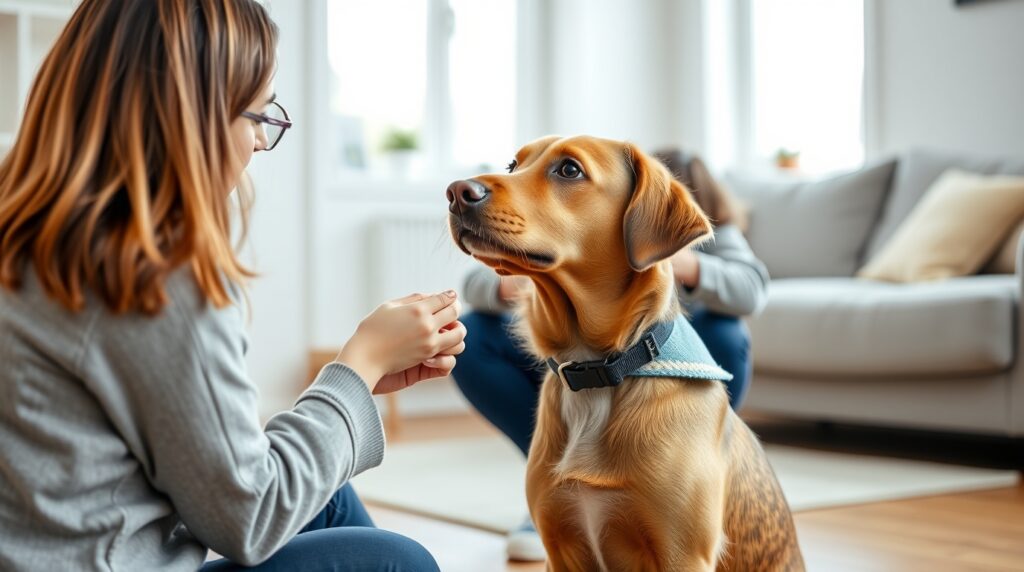
These are your foundation. Master these, and life becomes much easier.
Sit
Hold a treat above your dog’s nose and move it slightly back. As their head tilts up, their bottom naturally lowers.
Say “Sit,” reward immediately.
Simple. Powerful.
Stay
Ask your dog to sit. Show your palm and say “Stay.” Take one step back. If they don’t move, reward.
Increase distance slowly.
Come
This command could save your dog’s life.
Use an excited tone. Say “Come!” and reward generously when they approach. Make it fun.
Down
From a sitting position, lower a treat to the floor and pull it forward. Reward once they lie down.
Leave It
Place a treat in your closed hand. When your dog stops trying to get it, reward from the other hand.
This builds impulse control.
Potty Training for Beginners
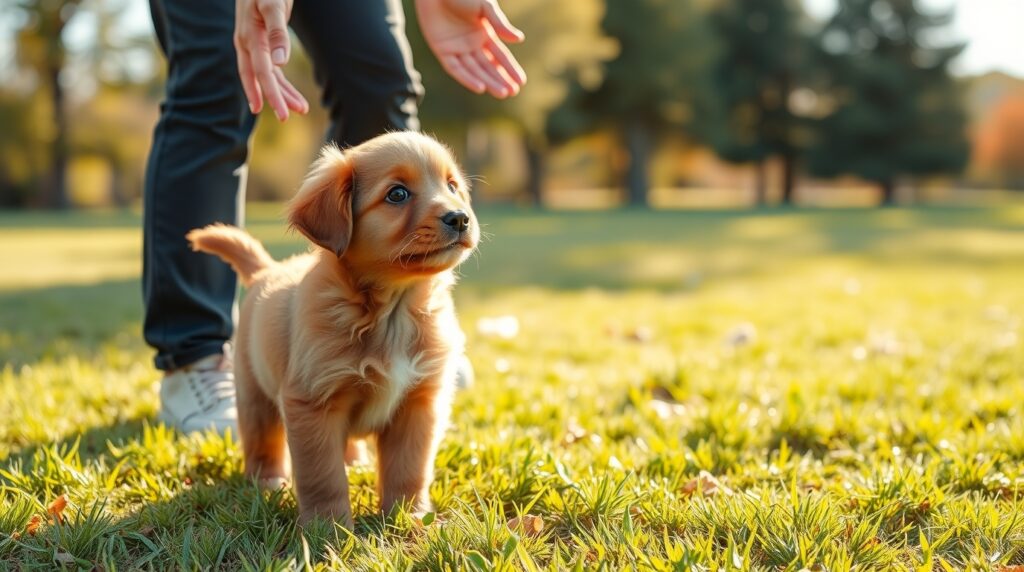
Establishing a Routine
Dogs thrive on routine.
Take your puppy outside:
- After waking up
- After eating
- After playing
- Before bedtime
Praise immediately after they go.
Common Mistakes to Avoid
- Punishing accidents
- Inconsistent schedules
- Giving too much freedom too soon
Accidents are learning opportunities, not failures.
Crate Training Made Simple
Benefits of Crate Training
A crate isn’t a cage — it’s a safe den.
Dogs naturally seek enclosed spaces. Crates help with potty training, prevent destructive behavior, and provide security.
Step-by-Step Introduction
Leave the crate open. Toss treats inside. Let your dog explore voluntarily.
Never force them in.
Gradually increase time inside with positive associations.
Leash Training and Walking Etiquette
Teaching Loose-Leash Walking
If your dog pulls, stop walking.
The moment the leash loosens, move forward again.
Consistency teaches them that pulling gets them nowhere.
Handling Pulling Behavior
Use direction changes. Reward when they walk beside you.
Patience here pays off massively.
Socialization for Puppies and Adult Dogs
Why Early Socialization Matters
Dogs exposed to various sights, sounds, and people early are less fearful later.
Fear-based aggression often comes from lack of exposure.
Safe Exposure Techniques
Introduce new environments gradually. Keep experiences positive.
Never overwhelm your dog.
Managing Common Behavioral Issues
Barking
Identify the trigger. Is it boredom? Anxiety? Alerting?
Address the root cause , not just the noise.
Jumping
Ignore jumping. Reward calm behavior.
Dogs repeat what works.
Chewing
Provide appropriate chew toys. Redirect instead of scolding.
Chewing is natural — destruction isn’t.
Training Schedule for Beginners
Daily Routine Plan
- 5–10 minute sessions
- 2–3 times per day
- Mix obedience with play
Short sessions beat long lectures.
How Long Should Sessions Be?
Keep it short and fun. End on a success.
Burnout kills progress.
When to Seek Professional Help
If you notice aggression, severe anxiety, or lack of progress after consistent effort, consult a professional trainer.
There’s no shame in asking for help.
Conclusion
Dog training basics for beginners aren’t complicated. They require patience, clarity, and consistency. Think of training as planting seeds. With daily effort, those seeds grow into obedience, confidence, and lifelong trust.
Your dog isn’t trying to challenge you. They’re trying to understand you.
Teach them kindly and you’ll gain a loyal companion who listens not out of fear, but out of love.
FAQs
1. How long does it take to train a beginner dog?
Basic commands can take 2–6 weeks with daily practice.
2. Can older dogs learn basic training?
Absolutely. Dogs of any age can learn with consistency.
3. How many times per day should I train my dog?
2–3 short sessions daily work best.
4. Should I use treats forever?
Gradually reduce treats and replace with praise once behavior becomes consistent.
5. What is the easiest command to teach first?
“Sit” is typically the easiest and most foundational command.
Also Read:
- Top Breeds for New Dog Owners – The Ultimate Beginner’s Guide to Choosing the Perfect Dog
- Cat Clothes Size Chart – The 2026 Ultimate Guide