

Helping an overweight dog lose weight is not simply about putting less food in the bowl. It is about finding the right balance between calories, essential nutrients, physical activity, and your dog’s individual health needs.
If your dog is gaining weight despite eating what seems like a normal amount, you may be wondering: How many calories should my dog eat to lose weight? Should I reduce kibble, switch to weight-management food, or cut out treats?
A dog food calculator for weight loss can help you estimate daily calorie needs and work out appropriate food portions. However, the calculation needs to be used carefully. Feeding too much can prevent weight loss, while excessive calorie restriction can lead to nutrient deficiencies and muscle loss.
This guide explains the calorie formula, provides practical examples, shows you how to convert calories into food portions, and outlines safer ways to help your dog reach a healthier weight.
Important: This article provides general educational guidance. Have your veterinarian assess your dog’s body condition and agree on an appropriate weight-loss target, especially if your dog is significantly overweight, has a medical condition, or takes medication.
Quick Answer: How Does a Dog Weight-Loss Calculator Work?
A dog food calculator for weight loss estimates the number of calories your dog may need each day to lose excess body fat while maintaining adequate nutrition.
The basic process is:
- Record your dog’s current weight.
- Estimate a healthy target weight with veterinary guidance.
- Calculate an appropriate calorie allowance.
- Check the calories per cup, can, or gram of your dog’s food.
- Calculate daily portions, including treats and extras.
- Monitor weight and body condition and adjust the plan with your veterinarian.
What Is a Dog Food Calculator for Weight Loss?
A dog weight-loss calculator is a tool for estimating how much energy a dog needs each day while working toward a healthier body condition.
It considers factors such as:
- Current weight and estimated ideal weight
- Age and life stage
- Activity level
- Body condition and muscle condition
- Neutering status
- Current food and calorie intake
- Treats and additional foods
- Medical conditions that affect weight or metabolism
The result can help you plan meals more consistently. It cannot diagnose obesity or determine an ideal weight accurately from body weight alone.
For example, a muscular Labrador and an overweight Labrador may weigh the same amount but need different feeding plans. A veterinarian can assess their body condition and help establish an appropriate target.
Dog Calorie Calculator for Weight Loss: The Basic Formula
One commonly used veterinary formula is the Resting Energy Requirement (RER) equation:
RER = 70 × body weight in kilograms^0.75
RER is an estimate of resting energy needs. It is not automatically the correct calorie allowance for weight loss.
Veterinary professionals use additional information to determine an appropriate feeding target. Some established weight-management methods calculate energy requirements from estimated ideal weight; other monitored protocols use a different starting approach. The appropriate method depends on the dog and the clinical plan.
For this reason, do not automatically feed your dog the RER calculated from its current weight—or assume that a fixed percentage reduction is suitable for every dog.
Example: Calculating RER for a 20 kg Dog
Suppose your dog weighs 20 kg.
Using the formula:
RER = 70 × 20^0.75
The result is approximately 662 kcal per day.
This is the dog’s estimated RER, not a personalized weight-loss prescription.
If the dog is overweight, your veterinarian can determine the appropriate target weight and calorie allowance, taking into account its health, current intake, body condition, and nutritional requirements.
Dog Weight-Loss Calorie Reference Table
The following table shows approximate RER values at different body weights. These figures are included to explain the calculation, not to prescribe daily weight-loss calories.
| Body Weight | Approximate RER |
|---|---|
| 5 kg | 234 kcal/day |
| 10 kg | 393 kcal/day |
| 15 kg | 534 kcal/day |
| 20 kg | 662 kcal/day |
| 25 kg | 784 kcal/day |
| 30 kg | 899 kcal/day |
| 35 kg | 1,011 kcal/day |
| 40 kg | 1,119 kcal/day |
| 45 kg | 1,223 kcal/day |
| 50 kg | 1,317 kcal/day |
Actual weight-loss targets may differ. Use a veterinarian-approved plan rather than treating these numbers as feeding instructions.
Should You Calculate Calories Using Current Weight or Ideal Weight?
This is one of the most important questions in canine weight management.
When a dog is overweight, calculating its energy needs from current weight alone can produce a target that is too high for weight loss.
Many established veterinary approaches use the dog’s estimated ideal body weight when calculating an initial weight-loss allowance. Other newer, step-based clinical protocols use the weight recorded at the beginning of a monitored treatment phase and reassess regularly.
These methods are not interchangeable. Your veterinarian should select the approach that best suits your dog.
How Do You Estimate a Dog’s Ideal Weight?
A veterinarian may assess:
- Whether the ribs can be felt easily
- Whether the dog has a visible waist from above
- Whether the abdomen slopes upward when viewed from the side
- The amount of fat covering the ribs and abdomen
- Muscle condition
- Breed and individual body structure
Body Condition Score (BCS) is commonly used to assess body fat. Muscle Condition Score (MCS) helps identify muscle loss that may otherwise be overlooked.
Do not choose a target weight solely from a generic breed-weight chart. Dogs of the same breed can have different healthy weights.
How to Calculate Dog Food Portions for Weight Loss
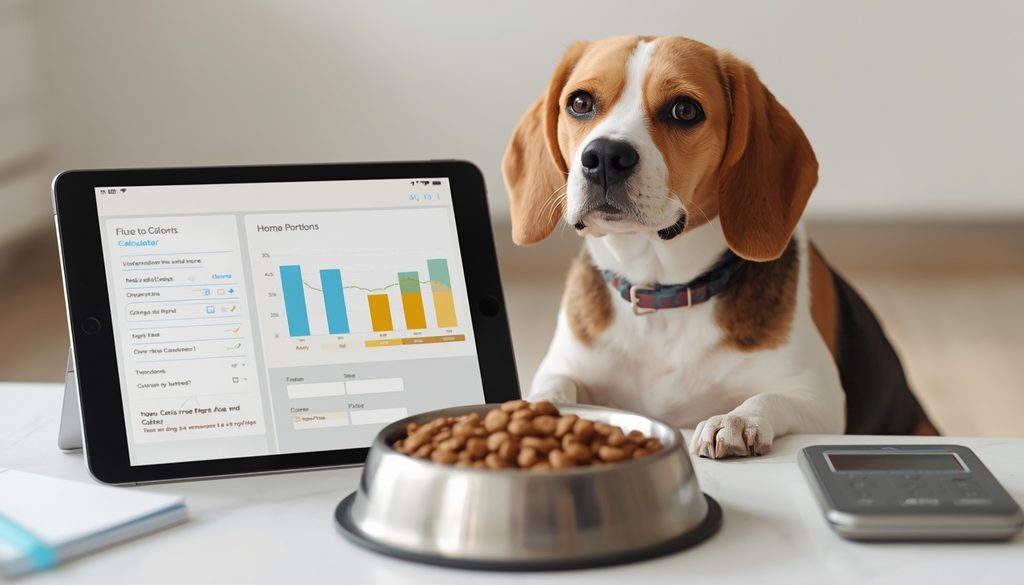
After your veterinarian establishes a daily calorie target, you can convert it into the amount of food your dog should receive.
You will need:
- Your dog’s daily calorie allowance.
- The food’s calorie content.
- The number of meals per day.
- The calories provided by treats and other extras.
Formula for Dry Dog Food
Daily food in grams = calories allocated to dry food ÷ calories per gram
For example, suppose your veterinarian approves a daily total of 700 kcal, and the chosen dry food contains 3.5 kcal per gram.
700 ÷ 3.5 = 200 grams.
That means 200 grams would supply 700 kcal, before accounting for any treats or other foods.
If some calories are reserved for treats, the amount of regular food must be reduced accordingly.
Formula for Food Measured by Cups
If the food provides 400 kcal per cup and the entire daily allowance for that food is 700 kcal:
700 ÷ 400 = 1.75 cups per day.
This example assumes the full allowance is allocated to that food. It is not a recommendation that every overweight dog should eat 1.75 cups.
Because kibble density varies between brands, weighing food in grams is often more consistent than relying on a household measuring cup.
Formula for Wet Dog Food
If a can contains 300 kcal and the daily calorie allowance allocated to wet food is 600 kcal:
600 ÷ 300 = 2 cans per day.
Check whether the label gives calories per can, per 100 grams, or per kilogram. Use the correct unit when calculating portions.
Dog Weight-Loss Calculator Example
Consider a hypothetical adult dog with the following details:
| Information | Example |
|---|---|
| Current weight | 20 kg |
| Target weight | To be established by a veterinarian |
| Food type | Dry dog food |
| Food calorie density | 3.5 kcal per gram |
| Approved daily calorie target | 700 kcal, for illustration only |
If the veterinarian has approved 700 kcal per day from the complete diet, the corresponding quantity of food would be:
700 ÷ 3.5 = 200 grams per day.
If the veterinarian has also allocated calories for treats, those calories must be subtracted from the daily food allowance.
The 700 kcal figure is illustrative. It is not a recommendation for every 20 kg dog or a calculation derived automatically from its current weight.
Wet and Dry Dog Food Calculator for Weight Loss
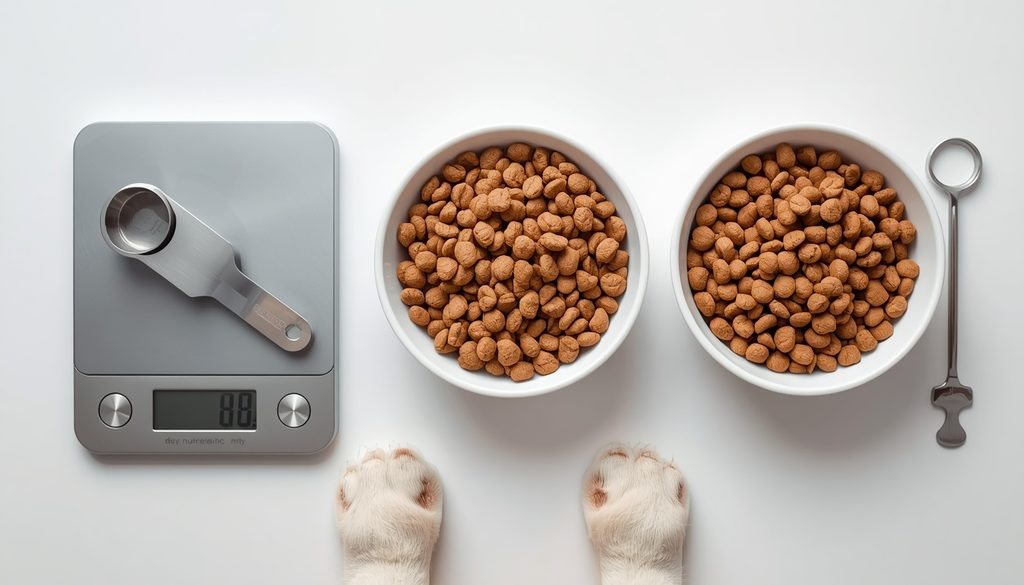
Some dogs eat a mixture of wet and dry food. This can work for weight management, provided you measure both foods and account for their combined calories.
Suppose a veterinarian approves a daily calorie allowance of 700 kcal and the planned split is:
- 400 kcal from dry food
- 300 kcal from wet food
If the dry food contains 4 kcal per gram:
400 ÷ 4 = 100 grams of dry food.
If the wet food contains 1 kcal per gram:
300 ÷ 1 = 300 grams of wet food.
The daily combination would provide 700 kcal before any additional treats or extras.
These are hypothetical food values. Always use the calorie information on the actual products you feed.
Never replace dry food with an equal volume of wet food. Their calorie densities can be very different.
What Is the Best Dog Food for Weight Loss?
The best food depends on your dog’s nutritional needs, health, preferences, and calorie target.
For dogs that need significant calorie restriction, a veterinarian may recommend a complete and balanced therapeutic weight-management diet. These diets are designed to provide essential nutrients within a controlled calorie allowance.
Look for a diet appropriate to your dog’s life stage and nutritional needs. Do not assume that a product labelled “light” or “weight control” will automatically be suitable for every dog.
Why Nutrient Adequacy Matters
Simply reducing the quantity of a regular food can reduce the intake of essential nutrients as well as calories.
Therapeutic weight-loss diets may be formulated to help maintain adequate protein, vitamins, minerals, and other nutrients while controlling energy intake.
How Many Calories Should an Overweight Dog Eat?
There is no single correct calorie target for every overweight dog.
A suitable allowance depends on the dog’s size, estimated ideal weight, current intake, activity, body condition, medical status, and the weight-loss method chosen.
For some dogs, the veterinarian may calculate a target using estimated ideal weight. In other cases, a carefully recorded food history can help establish current intake before the plan is adjusted.
Why a Food Diary Helps
For several days, record everything your dog eats or receives:
- Main meals
- Training treats
- Dental chews
- Table scraps
- Food used to administer medication
- Toppers and supplements containing calories
- Food offered by other household members
This record helps identify extra calories that are easy to miss.
If your dog’s weight has been stable, its documented calorie intake may provide useful information for the veterinarian. However, reported intake is only useful when the food and portion measurements are reasonably accurate.
Do Treats Affect Dog Weight Loss?
Yes. Treats can make a substantial difference to the total number of calories a dog receives.
Even when the main meals are measured correctly, frequent treats can undermine the calorie target.
The AAHA guidelines advise that the main complete and balanced diet should generally supply at least 90% of total calories, with treats and other extras contributing no more than 10%. For dogs on a strict weight-loss plan, your veterinarian may recommend an even smaller allowance.
Lower-Calorie Reward Ideas
Depending on your dog’s dietary needs, options may include:
- A few pieces of its regular kibble reserved for training
- Small pieces of a veterinarian-approved low-calorie treat
- Appropriate vegetables that are safe for dogs, such as plain cucumber or green beans, if tolerated
Treats should be introduced in suitable portions, and any special dietary restrictions should be followed.
Avoid foods toxic to dogs, including chocolate, grapes, raisins, products containing xylitol, and foods containing onion or garlic.
How Much Exercise Does an Overweight Dog Need?
Exercise can support weight management, but the right activity level depends on your dog’s health and fitness.
For a healthy dog, a veterinarian may recommend gradually increasing daily walks and incorporating suitable play or enrichment activities.
Start at a level your dog can comfortably manage. Avoid suddenly introducing long runs, strenuous hikes, or intense exercise for a dog that is significantly overweight or has joint, breathing, or heart problems.
Practical Ways to Increase Activity
- Take regular, manageable walks.
- Use gentle play sessions.
- Introduce food puzzles while accounting for their calories.
- Encourage movement throughout the day.
- Increase exercise gradually as fitness improves.
If your dog develops limping, excessive panting, breathing difficulty, weakness, or unusual fatigue, stop the activity and seek veterinary advice.
How Quickly Should a Dog Lose Weight?
Weight loss should be gradual and monitored.
A commonly cited veterinary goal for many dogs is approximately 1–2% of body weight per week, but this is not suitable for every patient. The appropriate rate depends on the dog’s condition and the veterinarian’s plan.
For example, a 20 kg dog losing 1% of its body weight would lose 200 grams in a week. At 2%, the change would be 400 grams.
These figures illustrate the percentages only; they are not a promise of how quickly an individual dog should lose weight.
Weigh your dog regularly under consistent conditions and arrange veterinary rechecks during the weight-loss process. If progress is too fast, too slow, or accompanied by muscle loss, the feeding plan may need adjustment.
Common Mistakes When Using a Dog Weight-Loss Calculator
1. Using Current Weight Without Considering Body Condition
A calculator cannot determine whether your dog is overweight from its weight alone.
2. Cutting Food Too Aggressively
Severe restriction can compromise nutrient intake and muscle condition. Use a veterinarian-approved calorie target.
3. Forgetting Treat Calories
Training treats, chews, table scraps, and toppers all contribute to total intake.
4. Assuming All Dog Foods Have the Same Calories
A cup of one kibble may provide substantially more calories than a cup of another.
5. Changing Food Portions Without Measuring Them
Use a digital kitchen scale or an accurate measuring method to keep portions consistent.
6. Ignoring Muscle Loss
A lower number on the scale does not necessarily mean the dog is losing only body fat. Monitor muscle condition as well as weight.
7. Expecting Immediate Results
Weight change takes time. Consistent feeding, activity, monitoring, and appropriate adjustments are more useful than frequent drastic changes.
When Should You Consult a Veterinarian?
Arrange a veterinary assessment before starting a structured weight-loss plan if your dog is substantially overweight or has any underlying health problem.
Professional guidance is particularly important if your dog:
- Is a puppy or still growing
- Is pregnant or nursing
- Has diabetes or another endocrine disorder
- Has kidney, liver, or heart disease
- Has mobility problems or significant arthritis
- Is already underweight or losing muscle
- Is taking medication that may affect weight or appetite
- Has unexplained weight gain or loss
If your dog develops a sudden loss of appetite, persistent vomiting, diarrhea, weakness, or unexpected weight loss, do not assume that the calorie plan is responsible. Seek veterinary assessment.
Printable Dog Weight-Loss Tracker
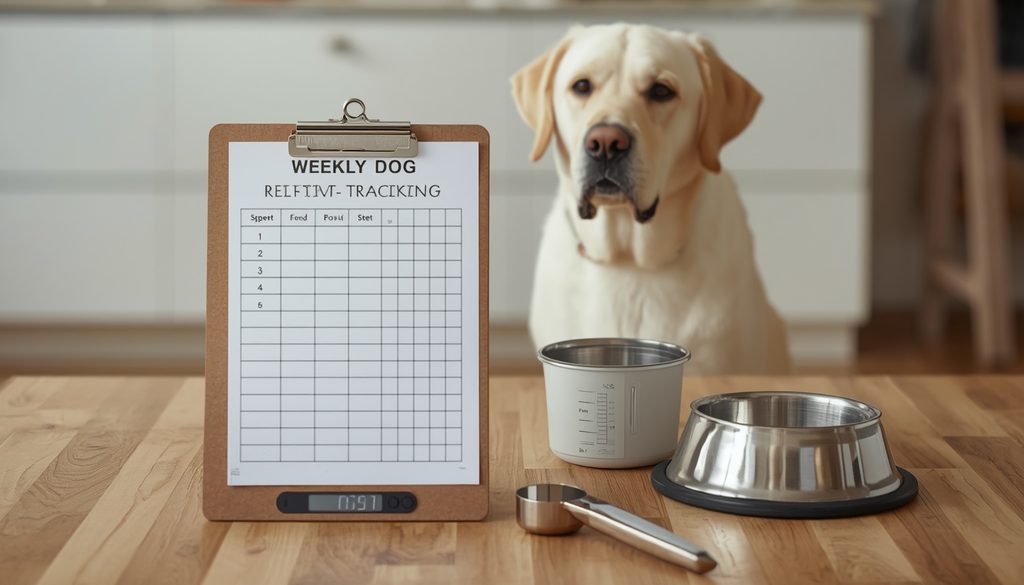
Use this template to record progress and share accurate information with your veterinarian.
| Tracking Item | Details |
|---|---|
| Dog’s name | __________________ |
| Breed and age | __________________ |
| Current weight | __________________ |
| Veterinarian-approved target weight | __________________ |
| Approved daily calorie allowance | __________________ |
| Food brand and type | __________________ |
| Food calorie density | __________________ |
| Daily food amount | __________________ |
| Daily treat allowance | __________________ |
| Exercise plan | __________________ |
| Next veterinary review | __________________ |
Weekly Progress Record
| Week | Weight | Food Amount | Activity | Notes |
|---|---|---|---|---|
| 1 | ______ | ______ | ______ | ______ |
| 2 | ______ | ______ | ______ | ______ |
| 3 | ______ | ______ | ______ | ______ |
| 4 | ______ | ______ | ______ | ______ |
Record changes consistently, and do not reduce the food allowance automatically whenever the scale stops moving. Review the results with your veterinarian before making significant adjustments.
Frequently Asked Questions
How do I calculate calories for my dog’s weight loss?
Start with a veterinary assessment of body condition and an appropriate target weight. A veterinarian can use established energy equations and your dog’s food history to set a daily calorie allowance. Divide that allowance between complete food and any treats, then monitor progress.
Can I use a dog calorie calculator without visiting a vet?
A calculator can provide educational estimates, but it cannot assess body condition, diagnose obesity, or identify medical causes of weight gain. A veterinary assessment is especially important before restricting calories in a significantly overweight dog.
Should I feed my dog based on ideal weight?
Many established weight-loss approaches use estimated ideal weight when calculating an initial calorie allowance. Other monitored protocols use a different starting method. Ask your veterinarian which method is suitable for your dog.
Is wet food better than dry food for weight loss?
Neither is automatically better. Compare calorie density, nutritional adequacy, portion size, and your dog’s individual needs. Some dogs do well with a complete wet diet, others with dry food, and some with a measured combination.
Should I stop giving treats to an overweight dog?
You may not need to eliminate every treat, but you should count treat calories. Reserving part of the dog’s regular measured food for training can help control extra calories.
How often should I weigh my dog?
Follow your veterinarian’s recommended schedule. During an active weight-loss program, regular checks—often every two to four weeks—help determine whether the plan is working and whether it needs adjustment.
Can I help my dog lose weight by feeding less of its regular food?
Sometimes, but simply reducing a regular diet can also reduce essential nutrient intake. For substantial weight loss, ask your veterinarian whether a complete therapeutic weight-management food would be more appropriate.
Final Thoughts
A dog food calculator for weight loss can help you plan portions, track calories, and understand how much food contributes to your dog’s daily energy intake. The safest approach is to use the calculation as a starting point, not as a substitute for an individualized feeding plan.
Determine an appropriate target weight, measure food consistently, count treats, support suitable physical activity, and monitor both body weight and muscle condition. If your dog is significantly overweight or has a medical condition, work with your veterinarian to choose the correct calorie target and adjust it according to the dog’s response.
Healthy weight loss is not about feeding the smallest possible amount. It is about helping your dog lose excess body fat while maintaining muscle, receiving essential nutrients, and enjoying a good quality of life.
Veterinary Resources
- American Animal Hospital Association: Weight Reduction in the Obese Pet
- Merck Veterinary Manual: Nutritional Requirements of Small Animals
- Association for Pet Obesity Prevention: Veterinary RER and MER Calculator
These resources explain veterinary energy calculations and weight-management principles. Their calculations should be interpreted in the context of an individual dog’s needs.
Also Read:
- Dog Food Calculator Wet and Dry: How Much Wet and Dry Food Should You Feed Your Dog?
- Dog Food Calorie Calculator: Calculate Your Dog’s Daily Calorie Needs Safely