

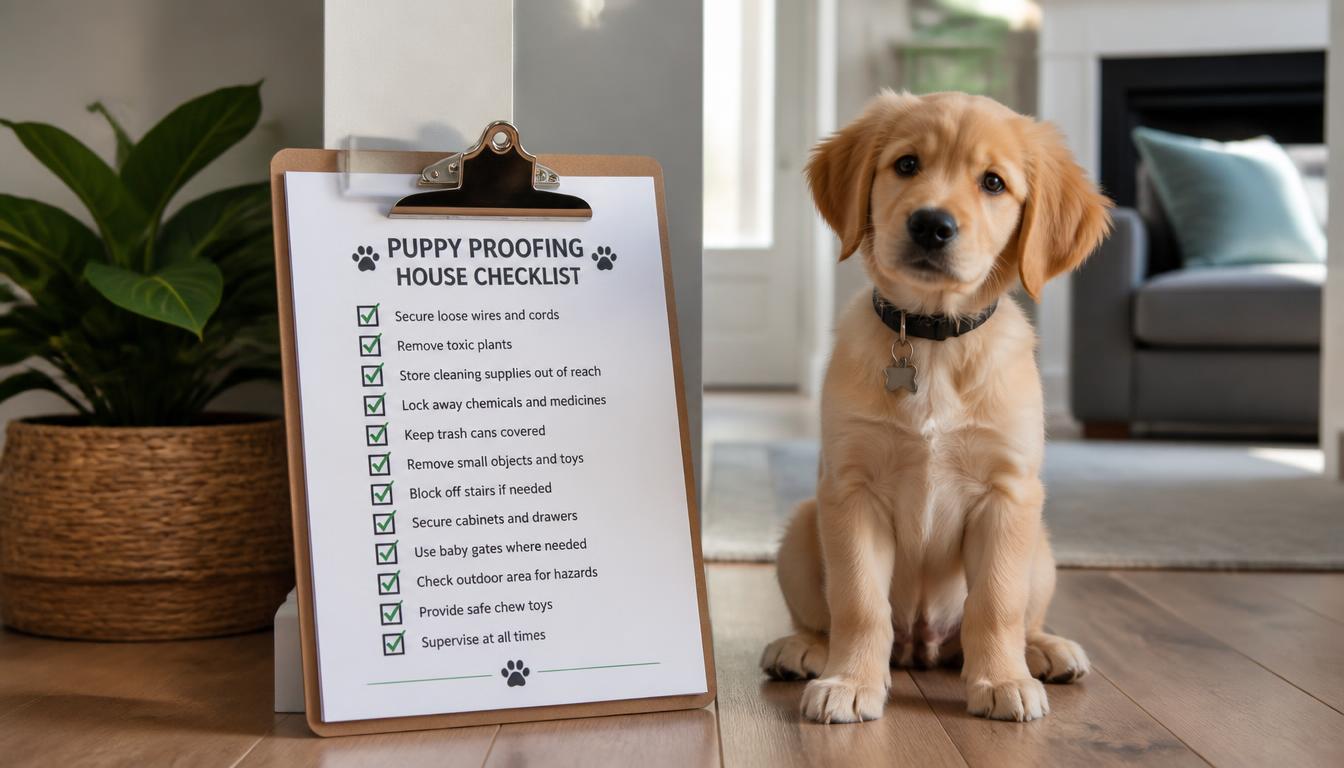
Bringing home a new puppy is an exciting experience, but it also comes with the responsibility of creating a safe environment. Puppies are naturally curious and love to explore with their noses and mouths. Without proper preparation, everyday household items can become dangerous hazards. That’s why having a puppy proofing house checklist is one of the first things every new dog owner should do.
From electrical cords and toxic plants to loose household items and unsafe furniture, there are many hidden dangers inside a home. Puppy-proofing helps prevent accidents, protects your belongings, and gives your furry friend a secure place to learn and grow.
In this complete guide, you’ll find a room-by-room puppy proofing checklist, essential safety tips, common household hazards, and expert advice to help keep your puppy safe during every stage of development.
Why Puppy Proofing Is Important?
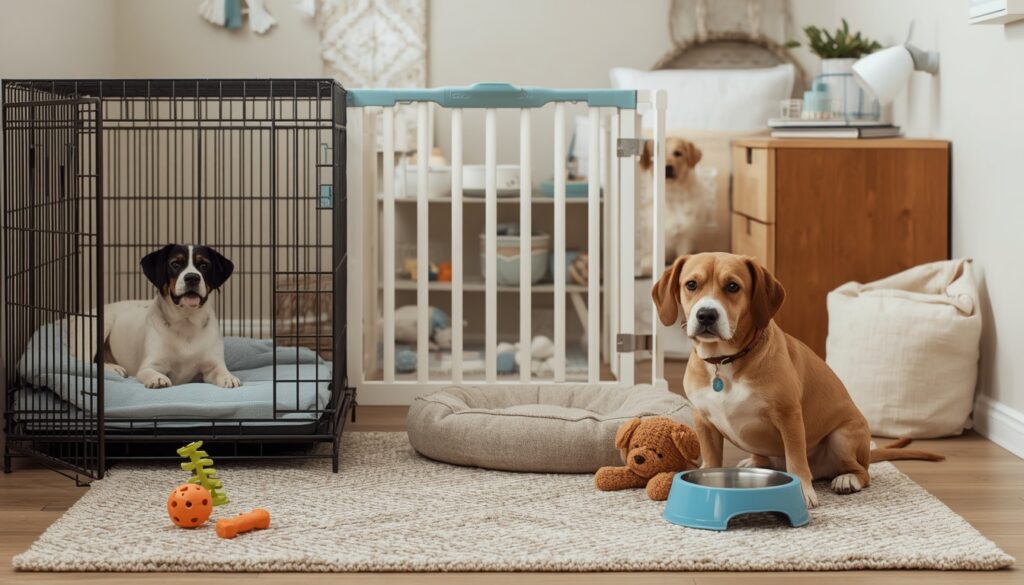
Puppies are energetic, playful, and eager to investigate everything around them. They often chew, climb, dig, and swallow objects without understanding the risks.
A properly puppy-proofed home helps:
- Prevent injuries
- Reduce the risk of poisoning
- Protect furniture and belongings
- Encourage healthy habits
- Minimize emergency vet visits
- Create a stress-free environment
Taking preventive steps before your puppy arrives can save you time, money, and worry.
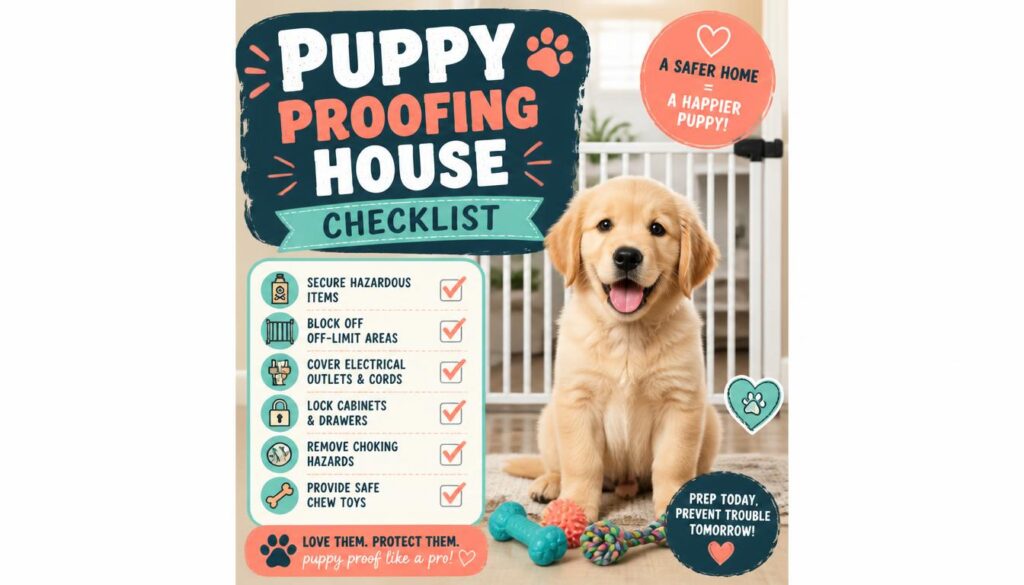
Complete Puppy Proofing House Checklist
Use this printable checklist to inspect every area of your home.
General Home Safety
☐ Remove small objects that could be swallowed
☐ Cover or secure electrical cords
☐ Store cleaning supplies in locked cabinets
☐ Keep trash cans covered
☐ Remove plastic bags from reachable areas
☐ Install baby gates where needed
☐ Secure heavy furniture to walls
☐ Keep medications out of reach
☐ Store batteries safely
☐ Close toilet lids
☐ Remove loose coins, buttons, and jewelry
☐ Check for choking hazards
☐ Keep sharp objects stored safely
☐ Lock away chemicals and pesticides
☐ Ensure smoke and carbon monoxide detectors work properly
Living Room Puppy Proofing Checklist
The living room is often where puppies spend the most time.
Checklist
☐ Hide electrical cords
☐ Remove decorative candles
☐ Keep remote controls off the floor
☐ Secure televisions and electronics
☐ Store shoes in closets
☐ Remove children’s toys
☐ Protect furniture corners if needed
☐ Keep houseplants out of reach
☐ Store blankets with loose strings
☐ Check for dangling cords from blinds or curtains
Kitchen Puppy Proofing Checklist
The kitchen contains many potential hazards.
Checklist
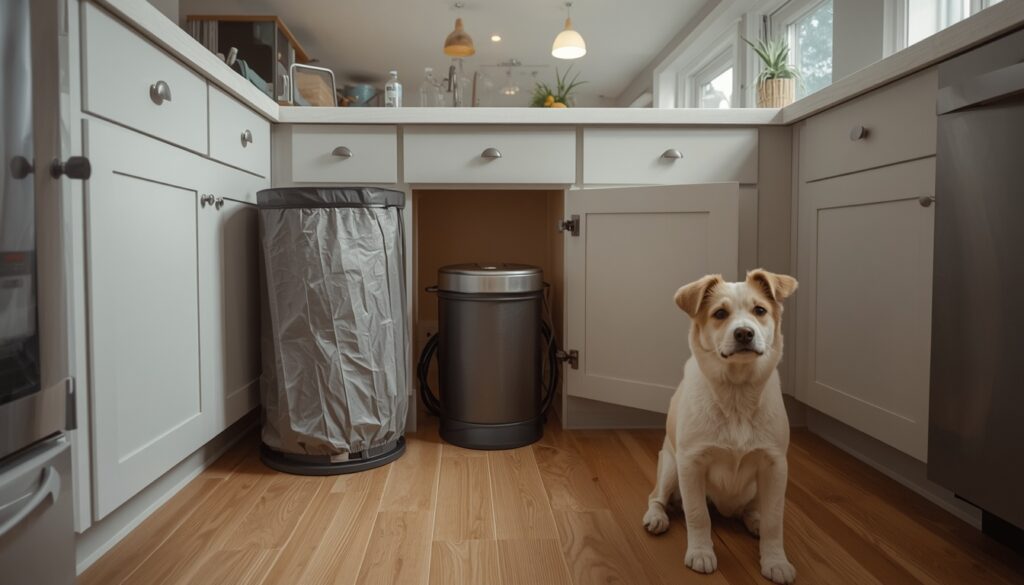
☐ Lock lower cabinets
☐ Store knives safely
☐ Keep food off countertops
☐ Secure trash cans with locking lids
☐ Store chocolate away
☐ Remove onions and garlic from accessible areas
☐ Keep grapes and raisins out of reach
☐ Store cleaning products securely
☐ Never leave hot cookware unattended
☐ Keep dishwashers closed
Bedroom Puppy Proofing Checklist
Bedrooms may seem safe but contain hidden risks.
Checklist
☐ Store laundry in closed hampers
☐ Keep socks off the floor
☐ Remove loose charging cables
☐ Store cosmetics safely
☐ Put medications away
☐ Keep jewelry in drawers
☐ Remove choking hazards
☐ Keep windows securely closed or screened
Bathroom Puppy Proofing Checklist
Bathrooms contain chemicals and small items that can be dangerous.
Checklist
☐ Store medications in cabinets
☐ Close toilet lids
☐ Lock cleaning products away
☐ Keep razors inaccessible
☐ Remove cotton swabs
☐ Store hair ties safely
☐ Keep bath products off low shelves
☐ Empty trash frequently
Laundry Room Checklist
Laundry rooms contain several hidden hazards.
☐ Store detergent safely
☐ Close washing machine doors
☐ Keep dryer sheets away
☐ Remove bleach from reach
☐ Secure ironing cords
☐ Store sewing supplies properly
Home Office Puppy Proofing Checklist
Office spaces often contain cords and small objects.
☐ Organize computer cables
☐ Remove paper clips
☐ Store pens and markers
☐ Keep batteries secure
☐ Protect power strips
☐ Store important documents
☐ Remove loose staples
Garage Safety Checklist
Garages are one of the most dangerous places for puppies.
☐ Store antifreeze securely
☐ Lock pesticides away
☐ Keep paint sealed
☐ Remove sharp tools
☐ Secure lawn equipment
☐ Store fertilizers safely
☐ Sweep away nails and screws
☐ Keep car fluids inaccessible
Backyard Puppy Proofing Checklist
Outdoor safety is just as important.
☐ Repair damaged fences
☐ Remove toxic plants
☐ Cover pools and ponds
☐ Store garden chemicals
☐ Check for escape gaps
☐ Remove sharp branches
☐ Keep compost bins closed
☐ Remove poisonous mushrooms
☐ Inspect for standing water
☐ Secure outdoor trash bins
Common Household Items Toxic to Puppies
Many everyday items can be harmful.
Foods to Avoid
- Chocolate
- Grapes
- Raisins
- Onions
- Garlic
- Xylitol
- Alcohol
- Coffee
- Macadamia nuts
Household Products
- Bleach
- Drain cleaners
- Laundry detergent
- Paint
- Batteries
- Air fresheners
Keep all hazardous items locked away.
Toxic Houseplants
Several popular indoor plants are unsafe for dogs.
Common examples include:
- Lily
- Sago Palm
- Aloe Vera
- Philodendron
- Pothos
- Dieffenbachia
Research every plant before bringing it into a pet-friendly home.
Electrical Safety Tips
Puppies love chewing cords.
Protect them by:
- Using cord protectors
- Hiding cables behind furniture
- Unplugging unused electronics
- Using outlet covers
Choosing Safe Puppy Toys
Offer durable toys instead of allowing puppies to chew household items.
Look for toys that are:
- Non-toxic
- Size appropriate
- Durable
- Easy to clean
Replace damaged toys immediately.
Creating a Puppy Safe Zone
Many owners create a dedicated puppy area.
Include:
- Comfortable bed
- Water bowl
- Food bowl
- Safe chew toys
- Crate
- Puppy pads if needed
A safe zone helps puppies feel secure while learning house rules.
Puppy Proofing by Age
8–12 Weeks
Focus on:
- Chewing prevention
- Potty training
- Supervision
3–6 Months
Expect:
- Increased chewing
- Teething
- More exploration
6–12 Months
Teenage puppies may:
- Jump higher
- Open cabinets
- Reach countertops
Continue updating your puppy-proofing measures as your dog grows.
Common Puppy Proofing Mistakes
Avoid these common errors:
- Leaving shoes on the floor
- Ignoring charging cables
- Using open trash cans
- Leaving food unattended
- Forgetting about toxic plants
- Not supervising new puppies
- Assuming one room is completely safe
Regularly inspect your home for new hazards.
Puppy Emergency Kit Checklist
Keep these essentials ready:
- First aid kit
- Emergency veterinarian contact
- Bandages
- Gauze
- Digital thermometer
- Saline solution
- Tweezers
- Emergency leash
Preparation can make a big difference during unexpected situations.
Frequently Asked Questions
How long should I puppy-proof my house?
Continue puppy-proofing until your dog consistently demonstrates safe behavior, which may take several months or longer depending on the breed and individual temperament.
Are baby gates useful for puppies?
Yes. Baby gates help restrict access to unsafe areas and make supervision easier.
Should puppies have free access to the entire house?
No. It’s generally best to introduce access gradually while supervising your puppy.
What is the biggest hazard for puppies?
Common risks include electrical cords, toxic foods, medications, cleaning products, and small objects that can be swallowed.
How often should I inspect my home?
Perform a quick safety check every week and after bringing new items into your home.
Final Thoughts
A well-prepared home gives your puppy the safest possible start in life. Following a comprehensive puppy proofing house checklist helps reduce accidents, protects your belongings, and creates an environment where your puppy can explore, learn, and grow with confidence.
Puppy-proofing isn’t a one-time task. As your puppy grows, develops new skills, and becomes more adventurous, revisit your checklist regularly to identify new hazards. With consistent supervision, safe toys, and a secure environment, you’ll help your puppy thrive while enjoying peace of mind.
Also Read:
- Homemade Food for German Shepherd Puppy: A Complete Nutrition Guide
- Printable Cesar Dog Food Feeding Chart: Complete Feeding Guide for Healthy Dogs
- Dog Feeding Schedule Chart – Complete Guide to Feeding Your Dog the Right Way
1 thought on “Puppy Proofing House Checklist: The Complete Guide”