

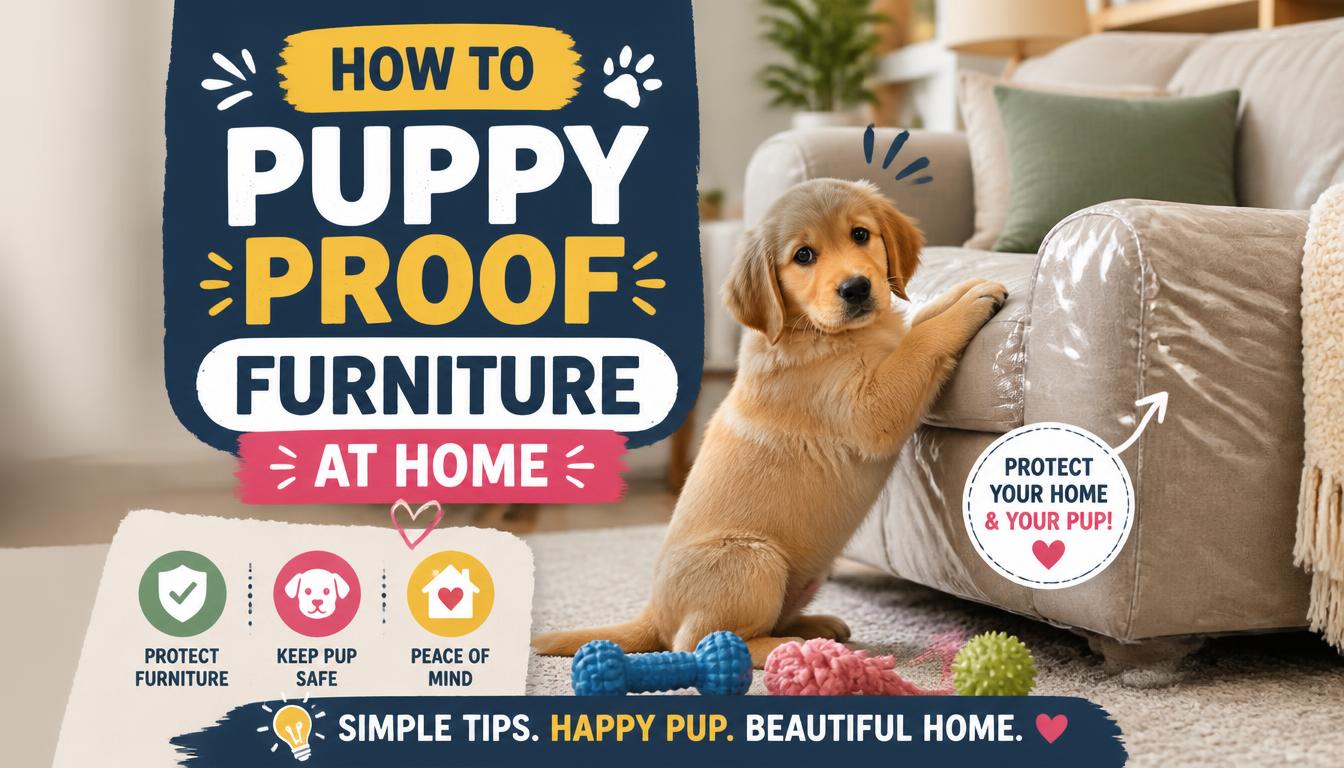
Bringing home a new puppy is an exciting experience, but it also means preparing your home for a curious and energetic companion. Puppies naturally chew, scratch, climb, and explore every corner of your house, making furniture one of their favorite targets. Learning how to puppy proof furniture at home can protect both your belongings and your puppy from potential injuries.
From wooden table legs and leather sofas to bookshelves and entertainment centers, nearly every piece of furniture can pose a risk to a young puppy. Proper puppy-proofing creates a safer environment, prevents destructive behavior, and helps your puppy develop good habits from an early age.
In this complete guide, you’ll learn practical ways to puppy proof different types of furniture, common mistakes to avoid, and expert tips for creating a safe and puppy-friendly home.
Why Puppy Proofing Furniture Is Important?
Puppies are naturally curious and use their mouths to explore their surroundings. During the teething stage, they often chew furniture because it helps relieve gum discomfort.
Proper furniture puppy-proofing helps:
- Prevent chewing damage
- Reduce injury risks
- Protect valuable furniture
- Keep puppies away from dangerous materials
- Encourage positive chewing habits
- Reduce stress for pet owners
Taking preventive measures early is much easier than repairing damaged furniture later.
Common Furniture Hazards for Puppies
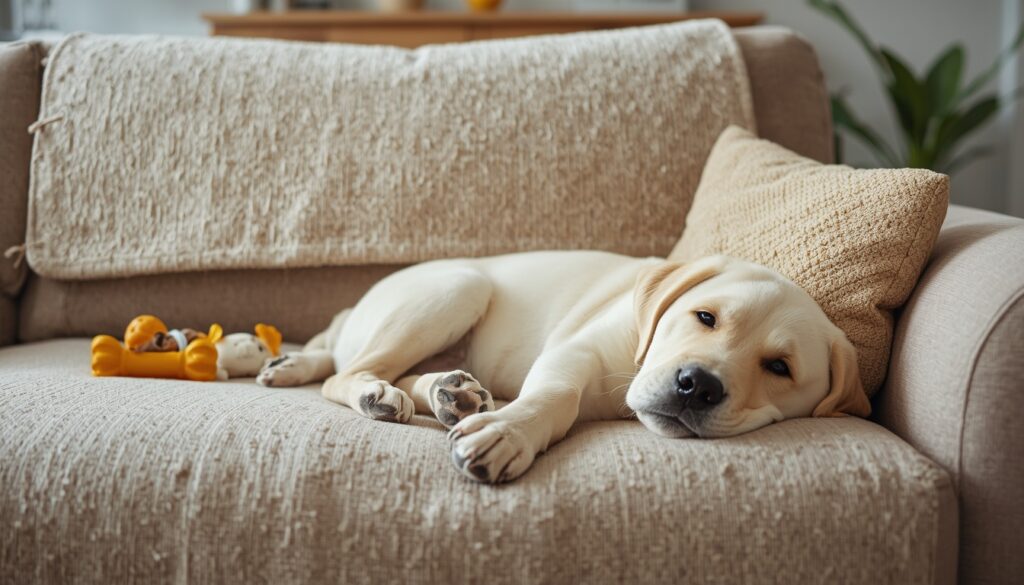
Many household furniture items contain hidden dangers.
Common risks include:
- Sharp corners
- Loose screws
- Splintered wood
- Exposed nails
- Glass surfaces
- Heavy furniture that may tip over
- Dangling cords behind furniture
Inspect every room carefully before allowing your puppy to roam freely.
How to Puppy Proof Wooden Furniture?
Wooden furniture is one of the most common chewing targets for puppies.
Protect Table and Chair Legs
Wooden legs are especially attractive during teething.
Solutions include:
- Install furniture leg protectors
- Use chew-resistant wraps
- Apply pet-safe furniture guards
- Redirect chewing with appropriate toys
Avoid using homemade sprays that may not be pet-safe.
Repair Damaged Wood
Check for:
- Splinters
- Cracks
- Loose pieces
Damaged wood can injure your puppy’s mouth or paws.
Sand rough edges and repair damaged furniture promptly.
How to Protect Sofas and Couches
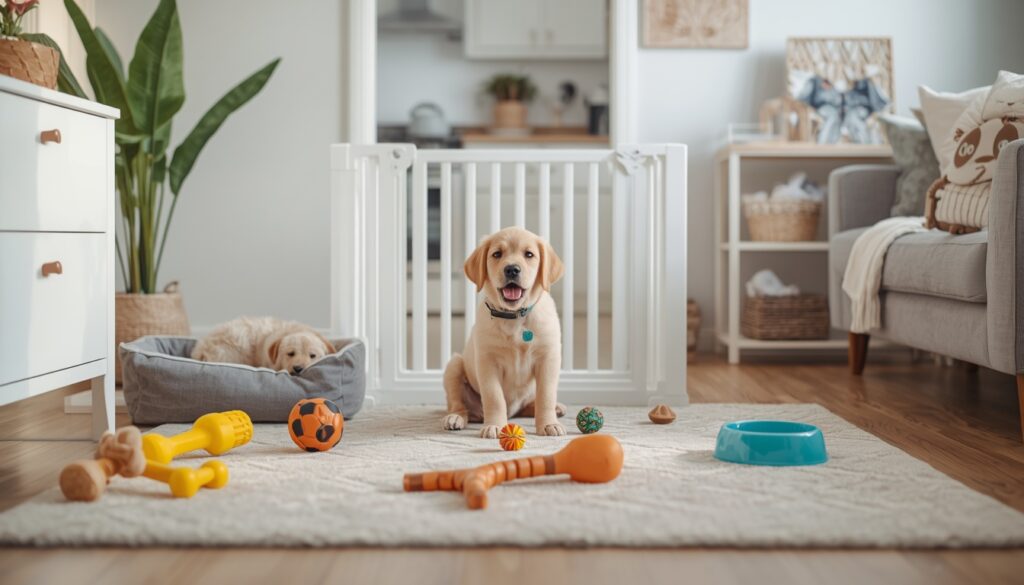
Sofas often become scratching and chewing targets.
Use Washable Furniture Covers
Furniture covers help protect against:
- Fur
- Dirt
- Chewing
- Scratches
Choose durable, machine-washable fabrics.
Block Under-Sofa Access
Puppies love hiding underneath furniture.
Use:
- Furniture blockers
- Storage bins
- Foam barriers
Preventing access reduces dust exposure and accidental entrapment.
Protect Leather Furniture
Leather furniture requires extra care.
To minimize damage:
- Keep chew toys nearby
- Use protective covers
- Supervise puppies during play
- Clean accidents immediately
Sharp puppy teeth can permanently damage leather surfaces.
Puppy Proof Coffee Tables
Coffee tables often contain dangerous objects.
Remove:
- Candles
- Remote controls
- Decorative glass items
- Coins
- Batteries
- Charging cables
Keep the tabletop free from anything your puppy could grab.
Secure Bookshelves and Cabinets
Curious puppies may attempt to climb or bump into furniture.
Safety steps include:
- Anchor bookshelves to walls
- Remove heavy decorations
- Store fragile items on higher shelves
- Close cabinet doors securely
Tall furniture should always be secured to prevent tipping.
Protect Dining Room Furniture
Dining tables and chairs often attract puppies because of food smells.
Remove Food Immediately
Never leave:
- Plates
- Leftovers
- Snacks
Even harmless-looking foods can be dangerous for dogs.
Store Chairs Properly
Push chairs completely under the table to discourage climbing.
Puppy Proof Entertainment Centers
TV stands contain multiple hazards.
Secure:
- Television
- Gaming consoles
- Speakers
- Electrical cords
Cable organizers and cord covers help prevent chewing.
Cover Sharp Furniture Corners
Many tables have sharp edges that can injure energetic puppies.
Install:
- Silicone corner guards
- Foam edge protectors
These inexpensive accessories reduce injury risk during play.
Hide Electrical Cords Behind Furniture
Electrical cords are one of the biggest household dangers.
Use:
- Cord protectors
- Cable sleeves
- Furniture cord channels
Never leave loose cords hanging where puppies can reach them.
Secure Recliners and Moving Furniture
Recliners and rocking chairs contain moving parts.
Always:
- Check underneath before using
- Supervise puppies nearby
- Block access when unattended
Moving furniture can cause serious injuries.
Organize Storage Furniture
Storage units should remain puppy-safe.
Keep lower shelves free from:
- Cleaning products
- Batteries
- Medications
- Sharp tools
Reserve lower shelves for pet-safe items whenever possible.
Protect Furniture During Teething
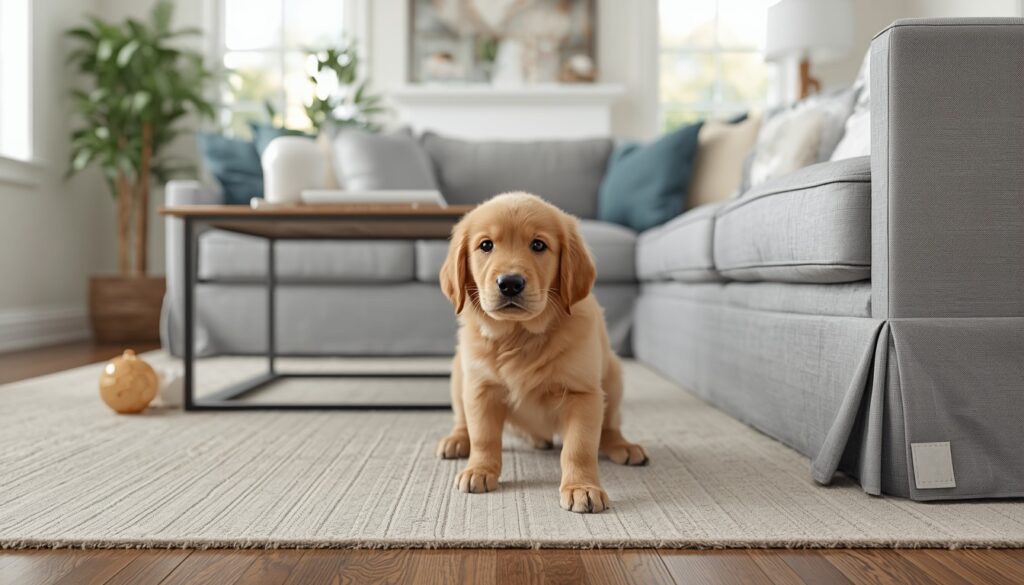
Puppies usually begin heavy chewing during teething.
Provide:
- Rubber chew toys
- Frozen puppy-safe toys
- Durable chew bones approved by your veterinarian
Redirect chewing immediately whenever furniture becomes the target.
Choose Puppy-Friendly Furniture Materials
If purchasing new furniture, consider durable materials.
Better options include:
- Microfiber
- Performance fabrics
- Scratch-resistant upholstery
- Washable slipcovers
These materials are generally easier to maintain.
Furniture Protection Products
Many commercial products help protect furniture.
Popular options include:
- Furniture corner guards
- Chew-resistant wraps
- Protective slipcovers
- Scratch-resistant tape
- Furniture shields
Choose products specifically designed for pet households.
Train Your Puppy to Respect Furniture
Training works best alongside physical protection.
Teach commands such as:
- Leave it
- Off
- Stay
- Come
Reward positive behavior with treats and praise.
Consistency is more effective than punishment.
Common Puppy Furniture Mistakes
Avoid these common mistakes:
Leaving Shoes Near Furniture
Shoes often encourage puppies to chew nearby furniture.
Ignoring Early Chewing
Small chewing habits can become permanent if not corrected.
Allowing Unsupervised Access
Young puppies should always be supervised.
Using Unsafe Deterrent Sprays
Only use pet-safe products recommended for indoor use.
Create a Puppy-Safe Play Area
Instead of allowing unrestricted access, create a dedicated puppy zone.
Include:
- Dog bed
- Water bowl
- Food station
- Safe chew toys
- Puppy playpen
A designated play area reduces furniture damage while encouraging positive habits.
Daily Furniture Safety Checklist
Use this simple checklist every day.
☐ Electrical cords covered
☐ Furniture corners protected
☐ Furniture anchored securely
☐ No food left on tables
☐ Decorative items removed
☐ Chew toys available
☐ Shoes stored away
☐ Cleaning supplies secured
☐ Puppy supervised during free time
☐ Furniture covers in place
Signs Your Puppy Needs More Mental Stimulation
Furniture chewing is sometimes caused by boredom rather than teething.
Watch for:
- Excessive chewing
- Constant barking
- Digging indoors
- Restlessness
Increase:
- Walks
- Puzzle toys
- Training sessions
- Interactive play
A mentally stimulated puppy is less likely to damage furniture.
Frequently Asked Questions
At what age do puppies stop chewing furniture?
Most puppies reduce destructive chewing between 6 and 12 months of age, although this varies by breed and individual temperament.
Are furniture deterrent sprays safe?
Pet-safe deterrent sprays can be effective when used according to the manufacturer’s instructions.
Should I allow my puppy on the couch?
This depends on your household rules. If you don’t want your dog on furniture as an adult, it’s best to establish that rule from the beginning.
What is the best furniture material for homes with puppies?
Microfiber and performance fabrics are durable, stain-resistant, and easier to clean than many other upholstery materials.
Can puppy chewing permanently damage furniture?
Yes. Wooden furniture, leather upholstery, and electrical cords can suffer permanent damage if chewing is not addressed early.
Final Thoughts
Learning how to puppy proof furniture at home is one of the best ways to create a safe environment for your new companion while protecting your investment in household furnishings. By covering cords, securing heavy furniture, protecting table legs, and providing appropriate chew toys, you can greatly reduce the risk of accidents and destructive behavior.
Remember that puppy-proofing is only one part of the solution. Consistent supervision, positive reinforcement training, regular exercise, and plenty of mental stimulation are equally important. As your puppy grows and learns good habits, you’ll be able to relax many of these precautions while enjoying a safe, happy, and well-behaved dog.
Also Read:
- Puppy Proofing House Checklist: The Complete Guide
- Homemade Food for German Shepherd Puppy: A Complete Nutrition Guide