

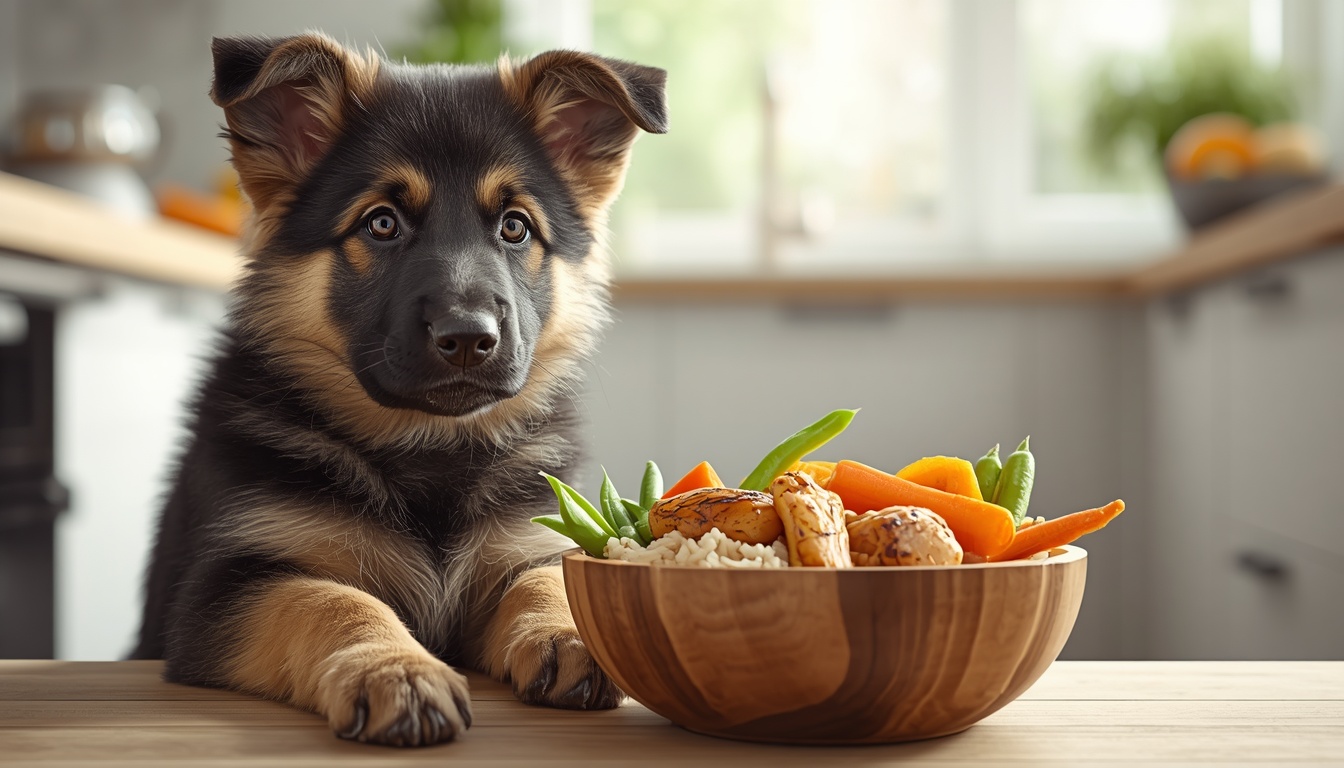
German Shepherd puppies are energetic, intelligent, and fast-growing dogs that require a nutrient-rich diet to support healthy bones, muscles, joints, and brain development. While many owners rely on commercial puppy food, preparing homemade food for a German Shepherd puppy allows you to control ingredient quality and provide fresh, wholesome meals tailored to your puppy’s needs.
This comprehensive guide explains everything you need to know about homemade diets for German Shepherd puppies, including balanced meal plans, safe ingredients, feeding schedules, recipes, and nutritional requirements.
Why Choose Homemade Food for a German Shepherd Puppy?

A well-balanced homemade diet offers several benefits:
- Fresh, high-quality ingredients
- No artificial preservatives or fillers
- Better control over protein and fat sources
- Easier management of food allergies or sensitivities
- Improved digestion
- Healthier skin and shinier coat
- Supports healthy bone and muscle development
However, homemade meals should always be nutritionally balanced to ensure your puppy receives all essential vitamins and minerals.
Nutritional Requirements for German Shepherd Puppies
German Shepherd puppies grow rapidly during their first year. Their diet should include the following nutrients.
High-Quality Protein
Protein supports muscle growth and tissue repair.
Excellent protein sources include:
- Chicken
- Turkey
- Lean beef
- Lamb
- Fish
- Eggs
Protein should make up around 25–30% of your puppy’s diet.
Healthy Fats
Healthy fats provide energy and support brain development.
Good sources include:
- Salmon oil
- Fish oil
- Flaxseed oil (small amounts)
- Chicken fat
Omega-3 fatty acids also help reduce inflammation and promote healthy joints.
Complex Carbohydrates
Carbohydrates provide slow-releasing energy.
Choose:
- Brown rice
- Sweet potatoes
- Oats
- Pumpkin
- Quinoa
Avoid excessive refined grains.
Vegetables
Vegetables provide fiber, antioxidants, vitamins, and minerals.
Safe vegetables include:
- Carrots
- Green beans
- Broccoli
- Spinach (small amounts)
- Peas
- Pumpkin
- Zucchini
Calcium and Phosphorus
Large-breed puppies need carefully balanced calcium and phosphorus for healthy bone growth.
Never add calcium supplements without veterinary guidance.
Best Homemade Food Recipes for German Shepherd Puppies
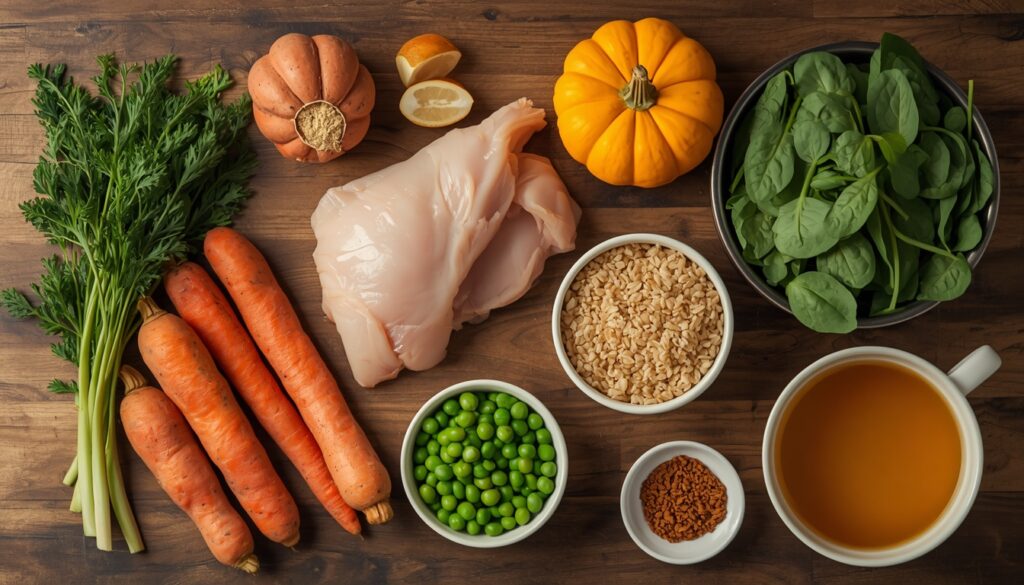
Recipe 1: Chicken and Rice Meal
Ingredients
- 250g boiled chicken breast
- 1 cup cooked brown rice
- ½ cup carrots
- ½ cup peas
- 1 teaspoon fish oil
Instructions
Mix all ingredients thoroughly and allow the meal to cool before serving.
Recipe 2: Beef and Sweet Potato Recipe
Ingredients
- Lean ground beef
- Cooked sweet potato
- Green beans
- Pumpkin puree
- 1 teaspoon olive oil
Instructions
Cook the beef completely, combine with mashed sweet potato and vegetables, then mix in olive oil before serving.
Recipe 3: Turkey and Vegetable Mix
Ingredients
- Ground turkey
- Brown rice
- Carrots
- Broccoli
- Pumpkin
Instructions
Cook the turkey thoroughly, steam the vegetables, combine with cooked rice, and mix everything together.
Recipe 4: Fish and Oats Meal
Ingredients
- Cooked salmon
- Cooked oats
- Spinach
- Green beans
Instructions
Flake the salmon into small pieces, mix with cooked oats and vegetables, and serve once cooled.
Homemade Food for German Shepherd Puppy by Age
2-Month-Old German Shepherd Puppy
Feed:
- Four meals daily
- Soft, easily digestible foods
- High-protein recipes
3-Month-Old German Shepherd Puppy
Feed:
- Four meals daily
- Introduce more vegetables
- Increase portion sizes gradually
4–6-Month-Old German Shepherd Puppy
Feed:
- Three meals daily
- Higher calorie intake
- Balanced protein and carbohydrates
6–12-Month-Old German Shepherd Puppy
Feed:
- Two to three meals daily
- Larger portions
- Continue balanced nutrition
German Shepherd Puppy Feeding Schedule
| Age | Meals Per Day |
|---|---|
| 8–12 Weeks | 4 |
| 3–6 Months | 3–4 |
| 6–12 Months | 2–3 |
| Over 12 Months | 2 |
Consistency is essential for healthy digestion.
How Much Homemade Food Should a German Shepherd Puppy Eat?
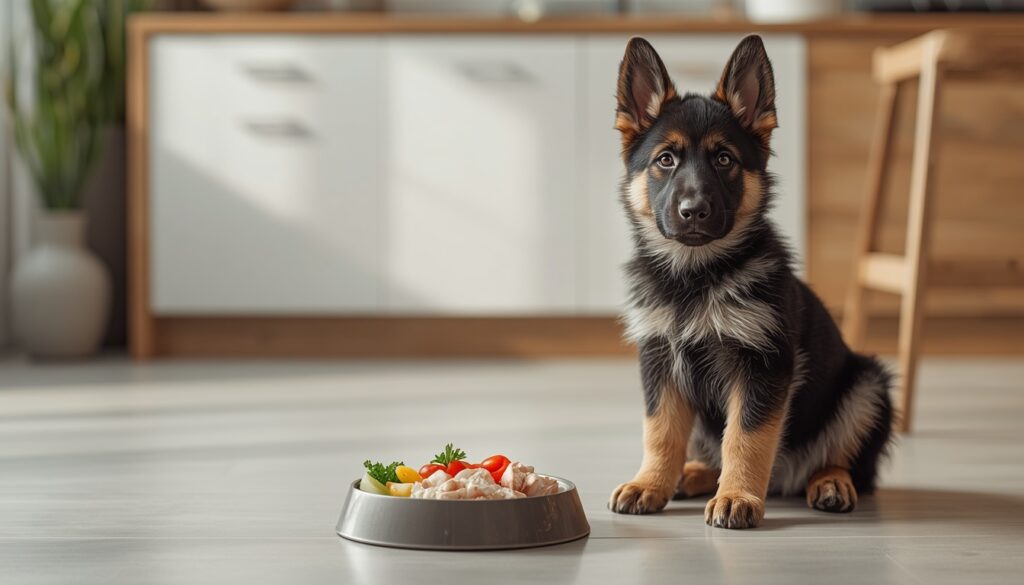
General guideline:
| Puppy Weight | Daily Food |
| 5 kg | 350–450 g |
| 10 kg | 600–700 g |
| 15 kg | 800–900 g |
| 20 kg | 1–1.1 kg |
Adjust portions according to your puppy’s activity level, body condition, and growth.
Foods to Avoid
Never feed your puppy:
- Chocolate
- Grapes
- Raisins
- Onions
- Garlic
- Avocado
- Alcohol
- Caffeine
- Macadamia nuts
- Cooked bones
- Excess salt
- Sugary foods
Supplements for Homemade Diets
Your veterinarian may recommend:
- Fish oil
- Joint support supplements
- Multivitamins
- Probiotics
Avoid giving supplements without professional advice, as excessive supplementation can be harmful.
Signs Your German Shepherd Puppy Is Eating Well
Healthy puppies usually have:
- Bright eyes
- Shiny coat
- Firm stools
- Healthy weight gain
- Strong muscles
- High energy
- Good appetite
Common Homemade Feeding Mistakes
Avoid:
- Feeding only meat
- Adding too much calcium
- Skipping vegetables
- Feeding table scraps regularly
- Overfeeding treats
- Making sudden diet changes
A balanced and consistent diet is the key to healthy development.
Tips for Preparing Homemade Puppy Food
- Cook meat thoroughly.
- Wash vegetables well.
- Avoid adding spices or seasonings.
- Prepare meals in weekly batches.
- Store in airtight containers.
- Refrigerate for up to three days or freeze individual portions.
Homemade Food vs Commercial Puppy Food
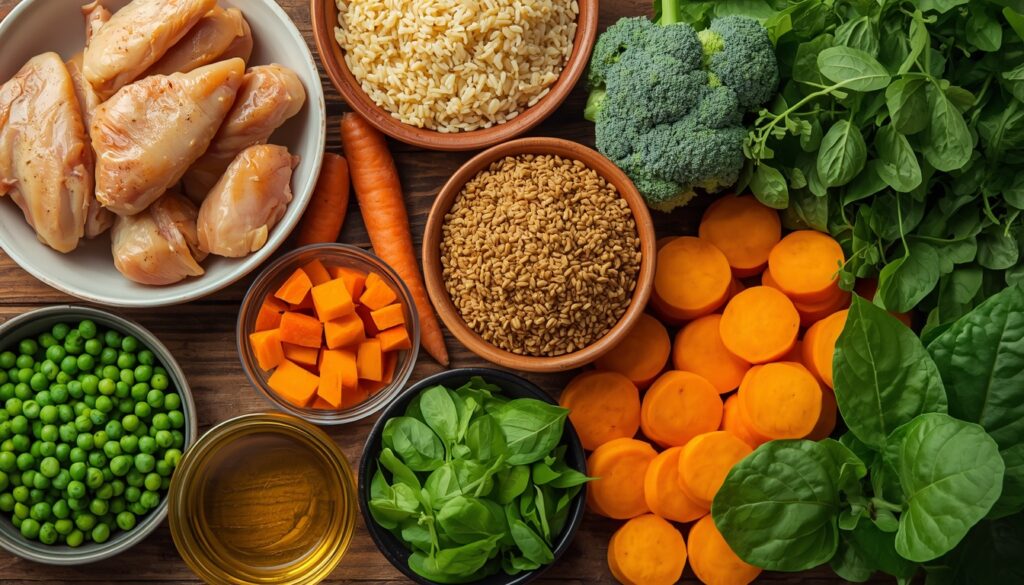
Homemade Food
Pros
- Fresh ingredients
- Complete ingredient control
- No artificial additives or fillers
Cons
- Time-consuming to prepare
- Requires careful nutritional planning
Commercial Puppy Food
Pros
- Convenient and easy to serve
- Nutritionally balanced
- Long shelf life
Cons
- May contain fillers or artificial ingredients
- Less flexibility in ingredient selection
Many pet owners successfully combine homemade meals with high-quality commercial puppy food for variety and nutritional balance.
Conclusion
A carefully planned homemade food for German Shepherd puppy can provide excellent nutrition and support healthy growth. Focus on lean proteins, healthy fats, vegetables, and complex carbohydrates while maintaining proper nutrient balance.
Whether you choose chicken, turkey, beef, or fish-based recipes, consistency and variety are key. Always monitor your puppy’s growth, adjust portions as needed, and consult your veterinarian before making significant dietary changes.
A nutritious homemade diet today lays the foundation for a strong, healthy, active, and happy German Shepherd throughout its life.
Frequently Asked Questions
Can German Shepherd puppies eat homemade food every day?
Yes. Homemade food can be fed daily as long as it is nutritionally complete and balanced for growing large-breed puppies.
What is the best protein for a German Shepherd puppy?
Chicken, turkey, lean beef, fish, and eggs are among the best protein sources for healthy growth.
Can I feed rice to my German Shepherd puppy?
Yes. Brown rice is an excellent source of digestible carbohydrates and provides sustained energy when served in appropriate portions.
How many times should I feed a German Shepherd puppy?
Puppies under three months usually need four meals daily. This gradually decreases to two meals per day as they reach adulthood.
Is homemade food better than commercial puppy food?
Both can be healthy options. Homemade food offers fresh ingredients and greater control, while high-quality commercial puppy food provides complete nutrition and convenience. Many owners choose a combination of both for the best results.
Also Read:
- Dog Training Basics for Beginners at Home: The Complete Step-by-Step Guide
- Dog Feeding Schedule Chart – Complete Guide to Feeding Your Dog the Right Way