

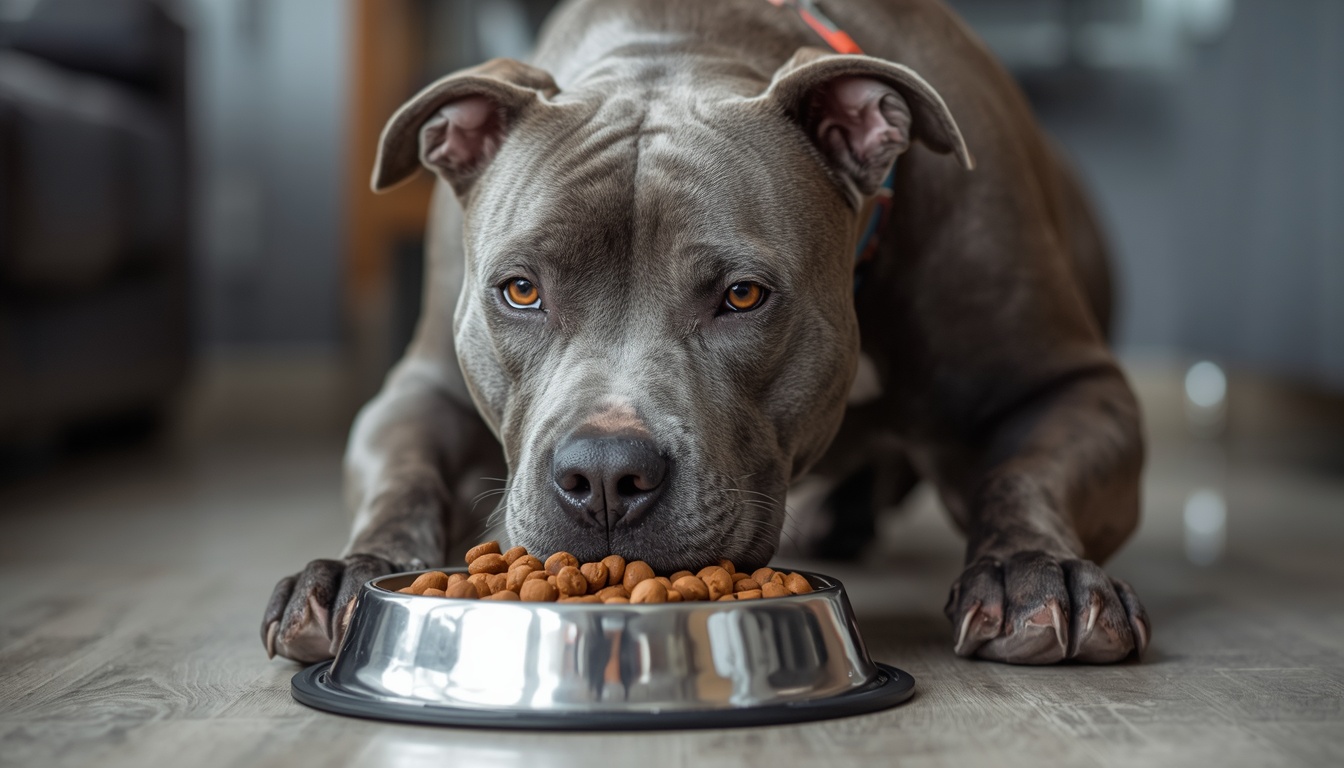
Pit Bulls are powerful, muscular, and energetic dogs that require high-quality nutrition to maintain their strength, health, and overall well-being. If you’re wondering what is the best dog food for a Pitbull, the answer depends on your dog’s age, activity level, weight, and any specific health concerns. However, one thing is certain: Pit Bulls thrive on protein-rich, nutrient-dense diets that support muscle development, healthy skin, and sustained energy.
Choosing the right food can help prevent common Pit Bull issues such as obesity, allergies, digestive problems, and joint stress. In this guide, you’ll learn what nutrients Pit Bulls need, the best types of dog food for different life stages, feeding tips, and how to choose the right diet for your dog.
Why Pit Bulls Need a Specialized Diet?

Pit Bulls are naturally athletic dogs with strong muscles and high energy requirements. Their diet should support:
- Lean muscle maintenance
- Healthy joints
- Strong immune system
- Healthy skin and coat
- Consistent energy levels
- Weight management
Poor-quality food can lead to nutritional deficiencies, excessive weight gain, digestive issues, and skin irritation.
Essential Nutrients for Pit Bulls
High-Quality Protein
Protein is the most important nutrient for Pit Bulls.
Good protein sources include:
- Chicken
- Turkey
- Beef
- Salmon
- Lamb
- Duck
Protein supports:
- Muscle growth
- Tissue repair
- Energy production
- Overall health
Look for dog foods where real meat is listed as the first ingredient.
Healthy Fats
Healthy fats provide energy and support skin and coat health.
Important fat sources include:
- Fish oil
- Salmon oil
- Chicken fat
- Flaxseed
Benefits include:
- Shiny coat
- Healthy skin
- Brain support
- Joint health
Complex Carbohydrates
Carbohydrates provide long-lasting energy.
Healthy sources include:
- Sweet potatoes
- Brown rice
- Oats
- Pumpkin
- Peas
Avoid foods loaded with unnecessary fillers.
Vitamins and Minerals
Pit Bulls need balanced vitamins and minerals to support:
- Bone strength
- Immune function
- Organ health
- Muscle recovery
Glucosamine and Chondroitin
These nutrients help support joint health, especially for active or older Pit Bulls.
Best Types of Dog Food for Pit Bulls
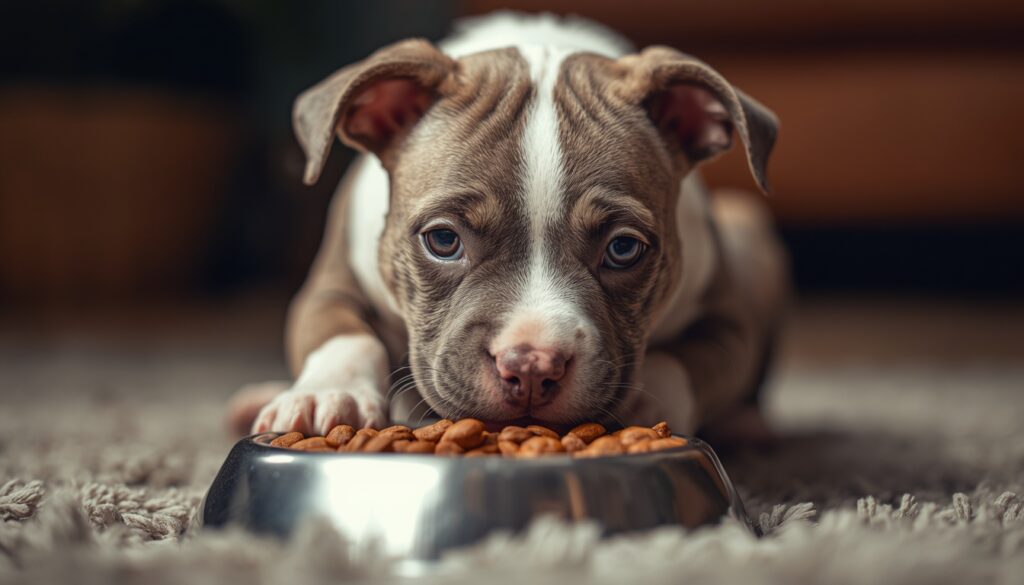
Dry Dog Food
Dry kibble is a popular choice because it is:
- Convenient
- Cost-effective
- Easy to store
- Helpful for dental health
Choose premium kibble with high meat content and minimal fillers.
Wet Dog Food
Wet food offers:
- Higher moisture content
- Strong flavor
- Easier chewing
It can be especially beneficial for senior dogs or picky eaters.
Mixed Feeding
Many Pit Bull owners combine dry and wet food.
Benefits include:
- Better hydration
- Variety in texture
- Balanced nutrition
Raw Diet
Some owners choose raw feeding.
Common ingredients include:
- Raw meat
- Bones
- Organs
- Vegetables
However, raw diets should be carefully balanced and discussed with a veterinarian.
Best Food for Pit Bull Puppies
Pit Bull puppies grow quickly and require nutrient-dense food.
Puppy Food Should Include
- High protein
- DHA for brain development
- Calcium for bone growth
- Healthy fats
Feeding Schedule for Pit Bull Puppies
| Age | Meals Per Day |
|---|---|
| 8–12 Weeks | 4 Meals |
| 3–6 Months | 3 Meals |
| 6–12 Months | 2–3 Meals |
Fresh water should always be available.
Best Food for Adult Pit Bulls
Adult Pit Bulls need a balanced diet that supports muscle maintenance and healthy weight.
Ideal Adult Diet
- 25–35% protein
- Moderate healthy fats
- Controlled calories
- Joint-support ingredients
Most adult Pit Bulls do well with two meals daily.
Best Food for Senior Pit Bulls
Senior Pit Bulls often experience:
- Reduced activity
- Joint stiffness
- Slower metabolism
Senior diets should contain:
- Lower calorie content
- Joint support nutrients
- Easily digestible ingredients
- Moderate protein levels
Wet food may also become more appealing as dogs age.
Common Food Allergies in Pit Bulls
Pit Bulls are known for being prone to allergies.
Common triggers include:
- Chicken
- Corn
- Soy
- Wheat
- Artificial additives
Signs of food allergies may include:
- Itchy skin
- Ear infections
- Excessive licking
- Digestive issues
If symptoms occur, consult your veterinarian about elimination diets.
Ingredients to Look For
When choosing food, prioritize:
Good Ingredients
- Real meat
- Fish oil
- Sweet potatoes
- Brown rice
- Pumpkin
- Oats
- Vegetables
Ingredients to Limit
- Artificial colors
- Artificial preservatives
- Excess fillers
- Low-quality meat by-products
How Much Should a Pit Bull Eat?
Food requirements vary based on:
- Age
- Weight
- Activity level
- Health status
Example Feeding Guide
| Weight | Daily Food Amount |
|---|---|
| 30–40 lbs | 2–3 cups |
| 40–60 lbs | 3–4 cups |
| 60–80 lbs | 4–5 cups |
Always follow product-specific feeding recommendations and adjust as needed.
Feeding Schedule for Pit Bulls

A consistent schedule supports digestion and behavior.
Example Daily Schedule
| Time | Meal |
|---|---|
| 7:00 AM | Breakfast |
| 6:00 PM | Dinner |
Avoid intense exercise immediately before or after meals.
Foods Pit Bulls Should Never Eat
Some foods can be toxic to dogs.
Avoid:
- Chocolate
- Grapes
- Raisins
- Onions
- Garlic
- Xylitol
- Alcohol
- Caffeine
- Macadamia nuts
Always keep these foods out of reach.
Signs Your Pit Bull Is Eating the Right Food
A healthy diet often results in:
- Lean muscle definition
- Healthy weight
- Shiny coat
- Good energy levels
- Healthy digestion
- Strong immune system
Signs the Food May Not Be Suitable
Watch for:
- Constant itching
- Loose stools
- Excessive shedding
- Weight gain
- Low energy
- Frequent ear infections
These may indicate dietary issues.
Dry Food vs Wet Food for Pit Bulls
| Dry Food | Wet Food |
|---|---|
| Convenient | Higher moisture |
| Affordable | Strong flavor |
| Helps dental health | Easier chewing |
| Long shelf life | Better hydration |
Many owners find mixed feeding provides the best balance.
Tips for Choosing the Best Dog Food for a Pit Bull
Read Ingredient Labels
Choose foods with named meat sources as the first ingredient.
Focus on Protein
Pit Bulls benefit from protein-rich diets.
Consider Activity Level
Active dogs may require more calories than less active dogs.
Monitor Weight
Regularly assess body condition and adjust portions when necessary.
Transition Slowly
When changing foods, gradually mix old and new food over 7–10 days.
Frequently Asked Questions
What protein is best for Pit Bulls?
Chicken, beef, turkey, lamb, and salmon are excellent protein sources.
Is grain-free food necessary for Pit Bulls?
Not necessarily. Grain-free diets may help some dogs, but many Pit Bulls do well with quality grains.
Can Pit Bulls eat homemade food?
Yes, but homemade diets must be nutritionally balanced and veterinarian-approved.
How often should Pit Bulls eat?
Most adult Pit Bulls thrive on two meals daily.
Do Pit Bulls need high-protein food?
Yes. Because of their muscular build and active nature, Pit Bulls generally benefit from higher-protein diets.
Final Thoughts
When asking what is the best dog food for a Pitbull, the answer is a high-quality, protein-rich diet that supports muscle development, healthy skin, strong joints, and sustained energy. The best food contains real meat, healthy fats, digestible carbohydrates, and essential vitamins and minerals.
Whether you choose dry food, wet food, or a combination of both, focus on ingredient quality rather than marketing claims. By feeding your Pit Bull a balanced diet and maintaining a consistent feeding routine, you can help your dog enjoy a healthier, stronger, and more active life.
Also Read:
- How to Puppy Proof Furniture at Home: A Complete Guide
- Puppy Proofing House Checklist: The Complete Guide
1 thought on “What Is the Best Dog Food for a Pitbull? Complete Nutrition Guide”