

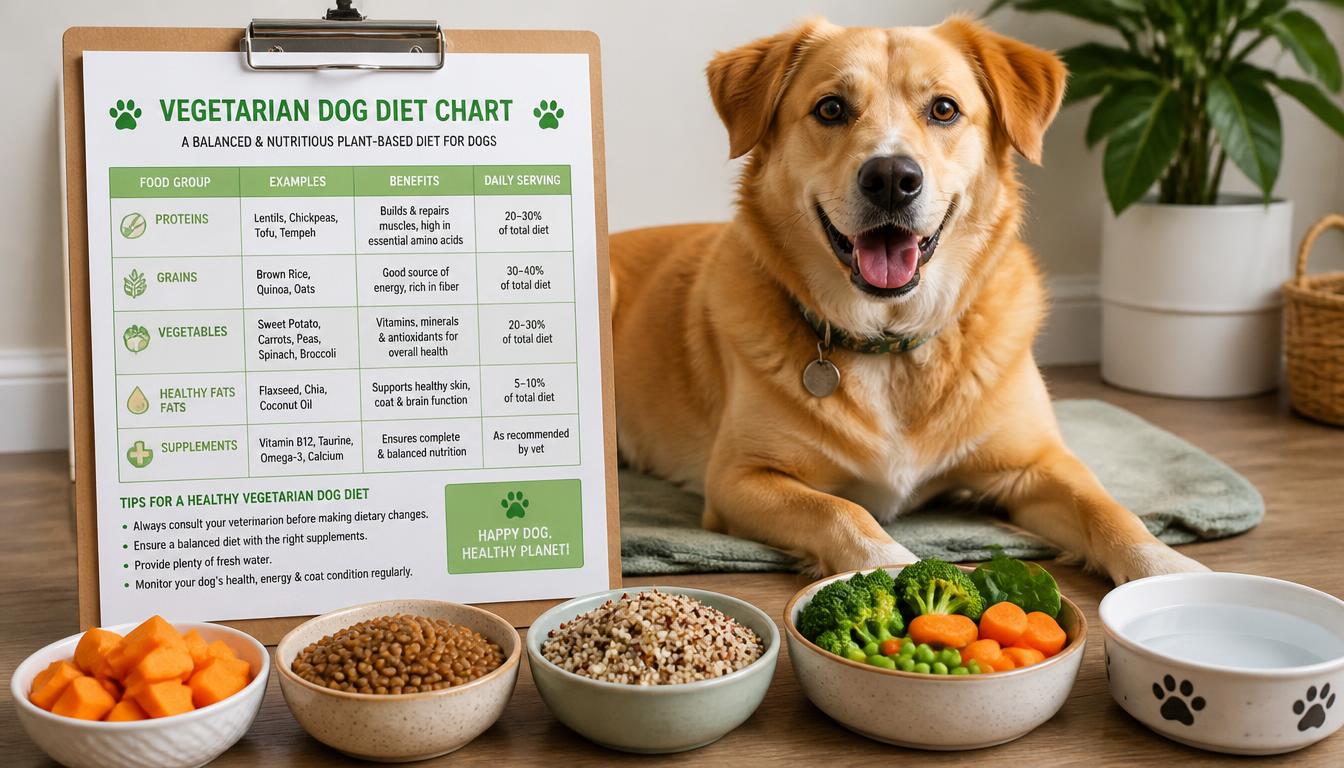
Many pet owners are exploring vegetarian diets for their dogs due to ethical, environmental, religious, or personal lifestyle choices. While dogs are naturally omnivores and can digest both animal and plant-based foods, creating a balanced vegetarian meal plan requires careful attention to nutrition. A properly planned vegetarian diet can provide the protein, vitamins, minerals, and energy dogs need to live healthy and active lives.
If you’re considering a vegetarian diet for your dog or looking for a printable vegetarian dog diet chart, this comprehensive guide covers everything you need to know. From nutritional requirements and meal planning to sample feeding schedules and common mistakes, you’ll learn how to provide a balanced vegetarian diet that supports your dog’s health.
Can Dogs Be Vegetarian?

One of the most common questions pet owners ask is whether dogs can thrive on a vegetarian diet.
The answer is yes, many dogs can live healthy lives on carefully balanced vegetarian diets. Unlike cats, which are obligate carnivores, dogs are omnivores and have evolved to digest a variety of foods, including grains, vegetables, legumes, fruits, and dairy products.
However, simply removing meat from a dog’s diet is not enough. The diet must still provide all essential nutrients, particularly protein, amino acids, vitamins, and minerals.
A poorly planned vegetarian diet can lead to nutritional deficiencies, so proper planning is critical.
Benefits of a Vegetarian Diet for Dogs
Many owners choose vegetarian feeding for various reasons.
Potential Benefits Include:
- Reduced exposure to certain food allergens
- Increased dietary fiber
- Support for healthy digestion
- Lower environmental impact
- Alignment with owner’s lifestyle choices
- Variety of nutrient-rich plant ingredients
Some dogs with sensitivities to chicken, beef, or lamb may also benefit from carefully formulated vegetarian diets.
Understanding Dog Diet Chart Vegetarian
Before creating a vegetarian meal plan, it’s important to understand what nutrients dogs require.
Protein
Protein is the most important nutrient in any dog diet.
Protein supports:
- Muscle development
- Tissue repair
- Immune function
- Growth
- Energy production
Vegetarian protein sources include:
- Lentils
- Chickpeas
- Green peas
- Soy products
- Tofu
- Cottage cheese
- Paneer
- Yogurt
- Quinoa
Protein remains essential regardless of whether the diet contains meat.
Essential Amino Acids
Dogs require specific amino acids for proper health.
Particularly important are:
- Lysine
- Methionine
- Taurine support
- Arginine
A well-designed vegetarian diet must include ingredients that provide adequate amino acid profiles.
Healthy Fats
Healthy fats are vital for:
- Skin health
- Coat quality
- Brain development
- Hormone production
- Energy
Vegetarian fat sources include:
- Flaxseed oil
- Coconut oil
- Sunflower oil
- Hemp seeds
- Chia seeds
Omega-3 fatty acids are especially important.
Carbohydrates
Carbohydrates provide energy and fiber.
Healthy sources include:
- Brown rice
- Oats
- Sweet potatoes
- Pumpkin
- Barley
- Quinoa
These foods help maintain energy levels while supporting digestive health.
Vitamins and Minerals
A vegetarian dog diet must supply:
- Calcium
- Phosphorus
- Zinc
- Iron
- Vitamin A
- Vitamin D
- Vitamin E
- B vitamins
Commercial vegetarian dog foods are typically fortified to ensure nutritional completeness.
Is a Homemade Vegetarian Diet Safe?

Homemade vegetarian diets can be safe when carefully balanced.
However, many homemade diets lack essential nutrients if not properly formulated.
For this reason:
- Use veterinarian-approved recipes
- Consider nutritional supplements
- Monitor your dog’s health regularly
A balanced approach is key.
Best Vegetarian Foods for Dogs
Sweet Potatoes
Benefits include:
- Fiber
- Vitamin A
- Digestive support
Brown Rice
Provides:
- Energy
- Easy digestion
- Essential nutrients
Pumpkin
Supports:
- Digestive health
- Healthy stools
Green Peas
Rich in:
- Plant protein
- Vitamins
- Minerals
Lentils
Excellent source of:
- Protein
- Fiber
- Iron
Chickpeas
Provide:
- Protein
- Complex carbohydrates
Quinoa
Contains:
- Complete protein
- Essential amino acids
Cottage Cheese
Offers:
- High-quality protein
- Calcium
Yogurt
Supports:
- Digestion
- Gut health
Foods to Avoid in a Vegetarian Dog Diet
Some human foods are dangerous for dogs.
Never feed:
- Onions
- Garlic
- Grapes
- Raisins
- Chocolate
- Xylitol
- Macadamia nuts
- Alcohol
These foods can be toxic even in small amounts.
Sample Vegetarian Dog Diet Chart
Small Dogs (5–10 kg)
Morning
- Cooked brown rice
- Cottage cheese
- Pumpkin
Afternoon Snack
- Apple slices (seedless)
Evening
- Lentils
- Sweet potatoes
- Mixed vegetables
Medium Dogs (10–25 kg)
Morning
- Quinoa
- Yogurt
- Cooked carrots
Afternoon Snack
- Banana slices
Evening
- Chickpeas
- Brown rice
- Green beans
Large Dogs (25 kg+)
Morning
- Oatmeal
- Cottage cheese
- Sweet potatoes
Afternoon Snack
- Dog-safe fruit
Evening
- Lentils
- Quinoa
- Mixed vegetables
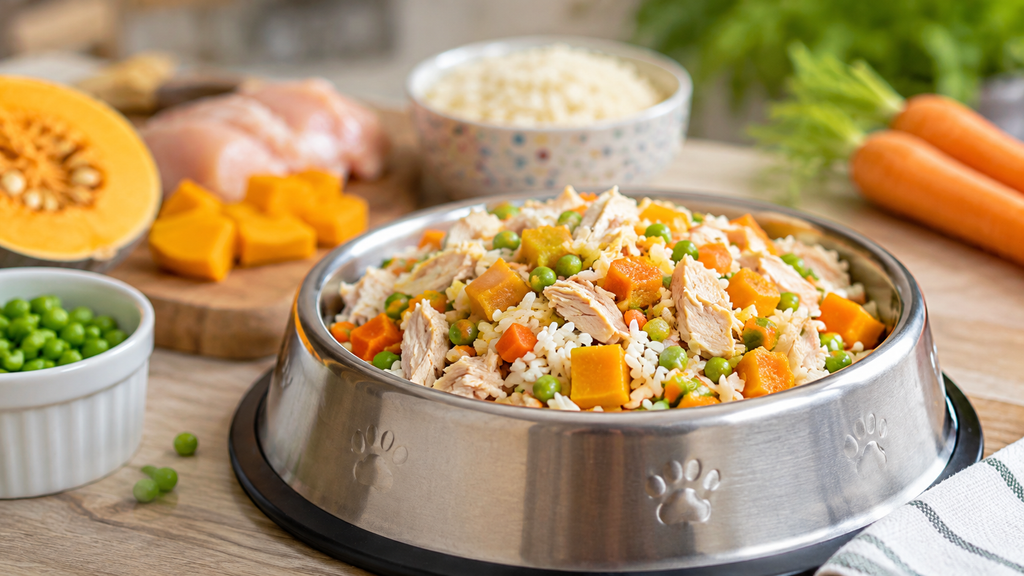
Printable Vegetarian Dog Diet Chart
Daily Feeding Planner
| Time | Food | Portion | Notes |
|---|---|---|---|
| Morning | ______ | ______ | ______ |
| Afternoon | ______ | ______ | ______ |
| Evening | ______ | ______ | ______ |
Weekly Meal Tracker
| Day | Breakfast | Dinner |
|---|---|---|
| Monday | ______ | ______ |
| Tuesday | ______ | ______ |
| Wednesday | ______ | ______ |
| Thursday | ______ | ______ |
| Friday | ______ | ______ |
| Saturday | ______ | ______ |
| Sunday | ______ | ______ |
Puppy Vegetarian Diet Considerations
Puppies have higher nutritional requirements than adults.
Important nutrients include:
- Protein
- Calcium
- DHA
- Phosphorus
Because growth demands are significant, veterinary guidance is highly recommended when feeding vegetarian diets to puppies.
Adult Dog Vegetarian Feeding Schedule
Most adult dogs do well with:
Morning Meal
7:00–8:00 AM
Evening Meal
5:00–7:00 PM
Consistent feeding schedules support digestion and routine.
Senior Dog Vegetarian Diet Tips
Senior dogs often benefit from:
- Easily digestible proteins
- Moderate calorie levels
- Joint support supplements
- Increased hydration
Monitoring weight becomes increasingly important with age.
Commercial Vegetarian Dog Foods
Many complete vegetarian dog foods are available.
Look for products that are:
- Nutritionally complete
- Life-stage appropriate
- Quality-tested
- Formulated by pet nutrition experts
Always read ingredient labels carefully.
Signs Your Dog Is Thriving on a Vegetarian Diet
Positive indicators include:
- Healthy weight
- Good energy levels
- Shiny coat
- Strong muscles
- Healthy digestion
- Consistent appetite
These signs suggest that nutritional needs are being met.
Signs of Nutritional Deficiency
Watch for:
- Weight loss
- Fatigue
- Dull coat
- Poor growth
- Digestive issues
- Muscle loss
Consult your veterinarian if any symptoms develop.
How to Transition to a Vegetarian Diet
A gradual transition helps prevent digestive upset.
Transition Schedule
| Day | Current Food | Vegetarian Food |
|---|---|---|
| 1–2 | 75% | 25% |
| 3–4 | 50% | 50% |
| 5–6 | 25% | 75% |
| 7+ | 0% | 100% |
Slow transitions allow the digestive system to adapt.
Common Mistakes When Feeding Vegetarian Diets
Not Providing Enough Protein
Protein deficiency is one of the most common problems.
Ignoring Amino Acid Balance
Dogs require complete amino acid profiles.
Overfeeding Carbohydrates
Balance is important.
Skipping Supplements
Certain nutrients may require supplementation.
Not Monitoring Health
Regular checkups help ensure nutritional adequacy.
Frequently Asked Questions
Can dogs live on a vegetarian diet?
Yes, many dogs can thrive on properly balanced vegetarian diets.
Is vegetarian food healthy for dogs?
It can be healthy if it provides complete and balanced nutrition.
What is the best protein source for vegetarian dogs?
Lentils, chickpeas, quinoa, soy products, cottage cheese, and yogurt are excellent options.
Can puppies eat vegetarian diets?
They can, but careful planning and veterinary supervision are strongly recommended.
Do vegetarian dogs need supplements?
Some may benefit from supplements depending on their diet composition.
Printable Monthly Vegetarian Dog Diet Planner
Dog Information
- Name: __________
- Breed: __________
- Age: __________
- Weight: __________
Weekly Weight Record
| Week | Weight |
|---|---|
| Week 1 | ______ |
| Week 2 | ______ |
| Week 3 | ______ |
| Week 4 | ______ |
Water Intake Checklist
| Day | Water Refreshed |
|---|---|
| Monday | Yes |
| Tuesday | Yes |
| Wednesday | Yes |
| Thursday | Yes |
| Friday | Yes |
| Saturday | Yes |
| Sunday | Yes |
Final Thoughts
A well-planned vegetarian dog diet chart can help provide balanced nutrition while supporting your dog’s health and well-being. Dogs are omnivores and can digest a wide variety of plant-based foods, but their diets must still meet essential nutritional requirements.
By focusing on high-quality protein sources, healthy fats, balanced carbohydrates, and appropriate vitamin and mineral intake, dog owners can successfully create vegetarian meal plans that support energy, digestion, muscle development, and overall health.
Whether you choose homemade meals or commercially prepared vegetarian dog food, consistency, proper planning, and regular veterinary monitoring are the keys to success.
Also Read:
- Printable Dog Food Care PDF: The Complete Guide
- Printable Cat Food Care PDF: The Ultimate Guide to Feeding Your Cat the Right Way