

Puppy Feeding Calculator by Weight: How Much Should You Feed Your Puppy?
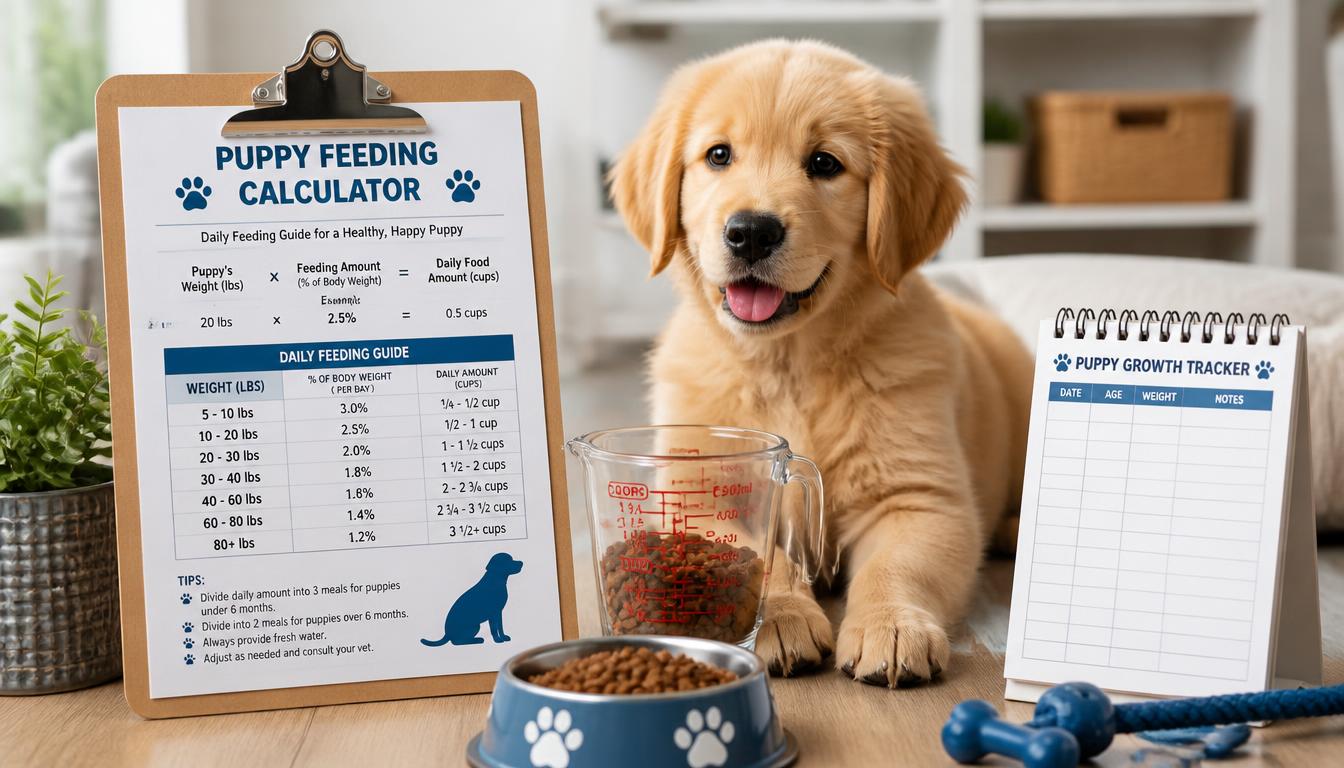
Feeding a puppy the right amount is essential for healthy growth, strong bones, muscle development, and overall well-being. While every puppy is unique, a puppy feeding calculator by weight can help estimate how much food your puppy needs each day based on its current weight, age, activity level, and the calorie content of the food. This guide explains how to calculate puppy food portions, provides feeding charts by weight, and offers practical tips to keep your growing pup healthy. Why Use a Puppy Feeding Calculator? Puppies grow rapidly during their first year and require more calories per pound than adult dogs. A feeding calculator helps: Factors That Affect How Much a Puppy Should Eat Before using a feeding calculator, consider: Puppy Weight Heavier puppies generally need more food than lighter puppies. Age Young puppies require more meals and calories than older puppies. Breed Size Activity Level Highly active puppies burn more calories. Food Type Wet food, dry food, homemade meals, and raw diets all contain different calorie levels. Puppy Feeding Calculator Formula A simplified daily feeding estimate: Small Breed Puppies (Under 10 kg Adult Weight) Current Weight Daily Food Amount 1 kg ¼ – ½ cup 2 kg ½ – ¾ cup 3 kg ¾ – 1 cup 4 kg 1 – 1¼ cups 5 kg 1¼ – 1½ cups Medium Breed Puppies (10–25 kg Adult Weight) Current Weight Daily Food Amount 5 kg 1 – 1½ cups 7 kg 1½ – 2 cups 10 kg 2 – 2½ cups 12 kg 2½ – 3 cups 15 kg 3 – 3½ cups Large Breed Puppies (25+ kg Adult Weight) Current Weight Daily Food Amount 10 kg 2½ – 3 cups 15 kg 3 – 4 cups 20 kg 4 – 5 cups 25 kg 5 – 6 cups 30 kg 6 – 7 cups These are general estimates and should be adjusted based on your puppy food’s calorie content. Puppy Feeding Schedule by Age 8–12 Weeks Feed 4 meals daily Time Meal 7:00 AM Breakfast 11:00 AM Meal 3:00 PM Meal 7:00 PM Dinner 3–6 Months Feed 3 meals daily Time Meal 7:00 AM Breakfast 1:00 PM Lunch 7:00 PM Dinner 6–12 Months Feed 2 meals daily Time Meal 7:00 AM Breakfast 6:00 PM Dinner Quick Puppy Feeding Calculator Chart Puppy Weight Approximate Daily Food 1 kg ¼ – ½ cup 2 kg ½ – ¾ cup 3 kg ¾ – 1 cup 5 kg 1 – 1½ cups 7 kg 1½ – 2 cups 10 kg 2 – 2½ cups 15 kg 3 – 3½ cups 20 kg 4 – 5 cups 25 kg 5 – 6 cups 30 kg 6 – 7 cups Example Calculation Puppy Details Estimated daily requirement: 2 to 2.5 cups of puppy food per day Split into: Signs You’re Feeding the Right Amount Healthy indicators include: Signs of Overfeeding Watch for: Signs of Underfeeding Watch for: Puppy Weight Tracking Sheet Month Weight 2 Months _____ 3 Months _____ 4 Months _____ 5 Months _____ 6 Months _____ 7 Months _____ 8 Months _____ 9 Months _____ 10 Months _____ 11 Months _____ 12 Months _____ Tracking growth helps you adjust food portions as needed. Printable Puppy Feeding Calculator Template Puppy Information Name: ___________________ Breed: ___________________ Age: ___________________ Current Weight: ___________________ Daily Feeding Log Meal Portion Completed Breakfast ______ □ Lunch ______ □ Dinner ______ □ Water Intake □ Fresh Water Refilled Treats Given Notes Common Puppy Feeding Mistakes Feeding Too Many Treats Treats should make up less than 10% of daily calories. Switching Foods Too Quickly Gradually transition over 7–10 days. Free Feeding Scheduled meals help monitor appetite and growth. Ignoring Weight Changes Weigh your puppy regularly. Frequently Asked Questions How much food should a puppy eat per kilogram? Most puppies eat approximately 30–55 grams of dry food per kilogram of body weight daily, depending on age and breed. How many times a day should a puppy eat? Can I use an adult dog food calculator? No. Puppies have different nutritional and calorie requirements. When should I switch to adult food? Most breeds transition between 10 and 18 months, depending on size and growth rate. Final Thoughts A puppy feeding calculator by weight is one of the easiest ways to ensure your puppy receives the right amount of nutrition for healthy growth. By monitoring weight, adjusting portions as your puppy develops, and maintaining a consistent feeding schedule, you can support strong bones, healthy muscles, and lifelong wellness. Remember that feeding charts are only guidelines. Your puppy’s ideal food intake depends on breed, activity level, metabolism, and the specific food you choose. Regular veterinary checkups and weight monitoring will help you fine-tune your puppy’s diet as they grow. Also Read: