

Best Room Setups for Multi Cat Homes
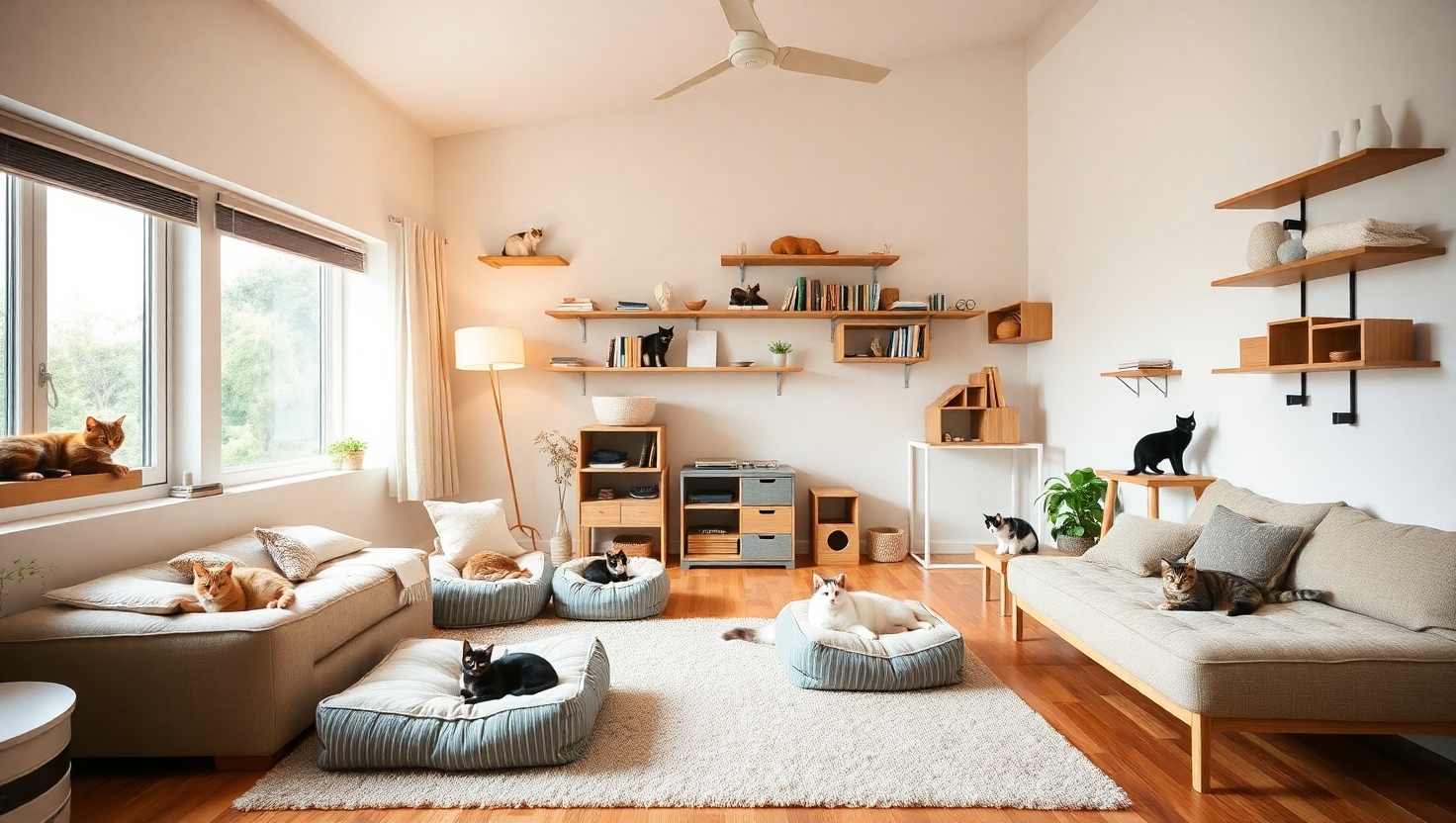
Did you know 68% of cats show territorial behavior? This instinct makes shared living tricky in multi-feline households. Designing thoughtful areas helps your pets feel secure while protecting your furniture from chaos. A dedicated cat room isn’t just a luxury – studies reveal it lowers cortisol levels by up to 40%. These private zones let cats retreat from household noise, reducing anxiety-induced scratching or hiding. Vertical shelves and separate feeding stations prevent conflicts over resources. Smart space planning considers different personalities. Shy cats need cozy hideaways, while playful ones require climbing structures. Multiple litter stations placed apart maintain hygiene and prevent territorial marking. Well-designed areas transform tense standoffs into peaceful coexistence. Key Takeaways Understanding Multi-Cat Home Dynamics Managing multiple cats under one roof requires more than just extra food bowls. Feline companions have complex social needs that demand thoughtful solutions. When territory feels cramped, even friendly cats can become tense roommates. Why a Dedicated Space Matters Cats are territorial by nature. Without clear zones, they may guard resources or hide from each other. A defined area gives each pet their own “base camp” to recharge. This setup helps reduce stress during meal times or play sessions. Research shows cats with personal spaces experience 42% fewer conflicts. Separate feeding stations prevent food bullying, while individual litter areas maintain hygiene. These boundaries let cats share your house without feeling crowded. Benefits for Cat Behavior and Health Private retreats do more than prevent fights. Cats with safe spaces show: Stress-related health issues drop dramatically when cats control their environment. A calm cat grooms properly, sleeps deeper, and explores more confidently. Their designated space becomes a wellness sanctuary that supports natural behaviors. Selecting the Ideal Room or Nook Creating harmony in multi-feline households starts with smart space selection. Whether converting a sunny alcove or repurposing unused square footage, focus on locations that balance security and stimulation. The right environment helps cats coexist peacefully while letting their personalities shine. Safety, Accessibility, and Comfort Prioritize zones away from heavy foot traffic and loud appliances. Spacious walk-in closets or under-stair nooks work beautifully for timid cats needing quiet retreats. Ensure every pet can reach food, water, and litter boxes without navigating obstacles – especially important for seniors or disabled felines. Steer clear of drafty basements or humid sunrooms. “Cats thrive in stable temperatures between 68-78°F,” notes feline behavior specialist Dr. Ellen Lee. Maintain proper ventilation while avoiding direct airflow from AC vents or heaters. Optimizing Natural Light and Views Position perches near windows with filtered sunlight – direct afternoon rays can overheat spaces. Use UV-blocking film to protect delicate paws while allowing birds-eye entertainment. East-facing locations offer gentle morning warmth cats adore. Even compact corners become premium real estate when featuring outdoor vistas. Wall-mounted shelves create vertical observation decks, letting multiple cats survey their domain comfortably. Essential Room Components and Layout Tips Cats thrive when their environment mirrors natural instincts while accommodating modern home life. Strategic organization transforms any cat room into a functional playground that reduces tension between furry roommates. Dividing Zones: Play, Rest, and Feeding Create clear boundaries using visual markers like rugs or low dividers. Active play zones work best near windows with feather wands and battery-operated mice stored in nearby baskets. Puzzle feeders and treat-dispensing toys keep minds engaged during solo playtime. Design rest areas with plush cave beds and elevated perches facing doorways. “Cats prefer sleeping spots where they can monitor entry points,” explains animal behaviorist Lisa Johnson. Place calming pheromone diffusers near nap stations for anxious pets. Incorporating Vertical Spaces and Climbing Stations Maximize wall space with staggered shelves and sisal-covered posts. Follow these guidelines: Multi-tiered cat trees with varied textures satisfy scratchers and climbers. Position taller structures near windows to create observation decks that prevent crowding. This vertical approach triples usable space while letting cats avoid confrontations. Best room setups for multi-cat homes Balancing your cats’ needs with your home’s aesthetic requires thoughtful organization. Smart layouts address territorial instincts while maintaining visual harmony, letting whiskered roommates coexist without cluttering your living areas. Strategic Waste Management and Dining Areas Follow the “N+1 litter box” rule – one per cat plus an extra. Place them in quiet corners away from appliances and feeding stations. Shy felines often prefer uncovered boxes with 3-4 inches of litter for natural digging behavior. Elevate food water dishes on stable platforms to discourage food guarding. Automated feeders with portion control help anxious cats relax during mealtimes. Separate dining stations prevent competition while encouraging hydration through multiple water sources. Activity Zones That Satisfy Instincts Mix horizontal and vertical scratchers near resting areas. Sisal posts satisfy claw maintenance needs, while cardboard pads work for ground-level enthusiasts. Position cat trees near windows to create observation decks that prevent crowding. Modular climbing systems let you rearrange components seasonally. “Rotating toys and structures prevents boredom,” suggests certified cat behavior consultant Mara Wells. Wall-mounted shelves with carpet tops offer additional perching options without floor space. Discreet Design Solutions Choose furniture serving dual purposes – side tables with built-in beds or entertainment centers hiding litter stations. Neutral-toned scratching posts blend with modern decor, while patterned tunnels add playful accents. Concealed feeding stations in kitchen islands keep bowls accessible yet tidy. Textured wall panels provide scratching surfaces while acting as art installations. These subtle touches maintain your style while supporting feline needs. Interactive and DIY Cat Room Ideas Transforming your space for multiple feline friends doesn’t require a designer budget or professional skills. Clever cat room ideas blend creativity with practicality, offering enrichment through interactive elements and personalized zones. Budget-Friendly Transformations Turn household items into engaging toys and structures. Cardboard boxes become adventure tunnels when stacked and connected. Attach feather wands to door frames for self-play, or hide treats in egg cartons for mental stimulation. Old bookshelves make excellent climbing stations when secured sideways. Wrap legs with sisal rope for scratching post alternatives. “Even simple modifications can spark hours of play,” says DIY pet enthusiast Jamie Rivera. Customized High-End Options For tech-savvy pet parents, … Read more