

If you’re a cat owner, choosing the best cat food container is just as important as choosing high-quality cat food. Proper storage helps maintain freshness, preserve nutrients, prevent contamination, and keep pests away. Whether you feed dry kibble, treats, or a combination of foods, the right container can make a significant difference in your cat’s health and your convenience.
Many pet parents spend time researching the best cat food brands but overlook how food is stored after opening the bag. Exposure to air, moisture, heat, and light can cause food to lose flavor, nutritional value, and freshness. That’s why investing in a high-quality cat food storage container is a smart decision.
In this guide, you’ll learn everything about choosing the best cat food container, key features to look for, storage mistakes to avoid, and tips for keeping your cat’s food fresh for longer.
Why You Need a Cat Food Container?
Most dry cat food bags are not designed for long-term storage once opened. Every time the bag is opened, food becomes exposed to air and humidity.
A good cat food container helps:
- Preserve freshness
- Prevent nutrient loss
- Block moisture
- Keep insects away
- Reduce food waste
- Eliminate odors
- Organize feeding supplies
Proper food storage can help ensure your cat receives the same quality nutrition from the first serving to the last.
What Happens When Cat Food Is Stored Improperly?
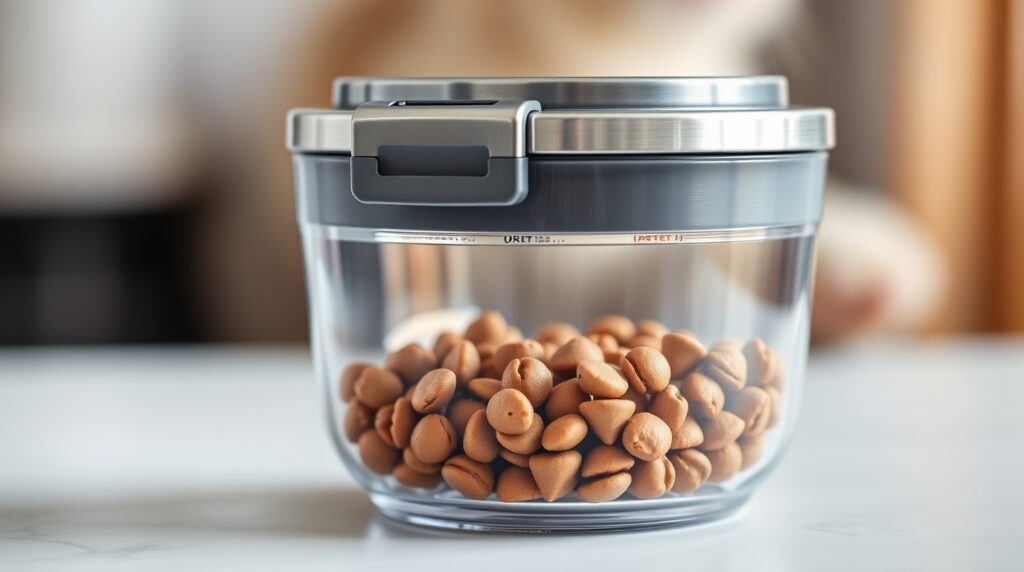
Improper storage can lead to several problems that affect food quality and safety.
Loss of Freshness
Exposure to oxygen causes fats in cat food to oxidize. This can make the food stale and less appealing to cats.
Moisture Contamination
Humidity can lead to mold growth and bacterial contamination.
Pest Infestation
Open food bags attract:
- Ants
- Cockroaches
- Pantry moths
- Rodents
Nutrient Degradation
Heat and sunlight can reduce the effectiveness of certain vitamins and nutrients.
Unpleasant Odors
Poor storage may allow strong food smells to spread throughout your home.
Features to Look for in the Best Cat Food Container
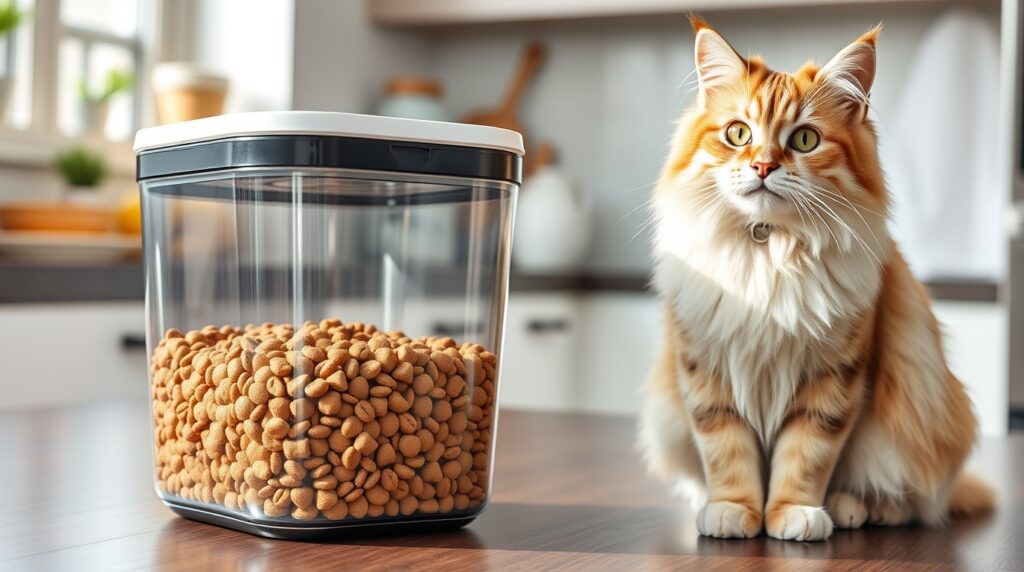
Not all storage containers are created equal. Choosing the right one requires understanding the features that matter most.
Airtight Seal
An airtight seal is the most important feature.
Benefits include:
- Maintains freshness
- Prevents oxidation
- Blocks humidity
- Keeps pests out
Look for containers with silicone gaskets and secure locking lids.
Food-Grade Materials
Always choose containers made from food-safe materials.
Common options include:
- BPA-free plastic
- Stainless steel
- Food-grade polypropylene
Avoid containers not specifically designed for food storage.
Appropriate Size
Choose a size based on your cat food purchasing habits.
Small Containers
Ideal for:
- Single-cat households
- Small food bags
- Limited storage space
Medium Containers
Suitable for:
- Multiple cats
- Larger food purchases
Large Containers
Best for:
- Multi-pet homes
- Bulk food storage
Best Types of Cat Food Containers
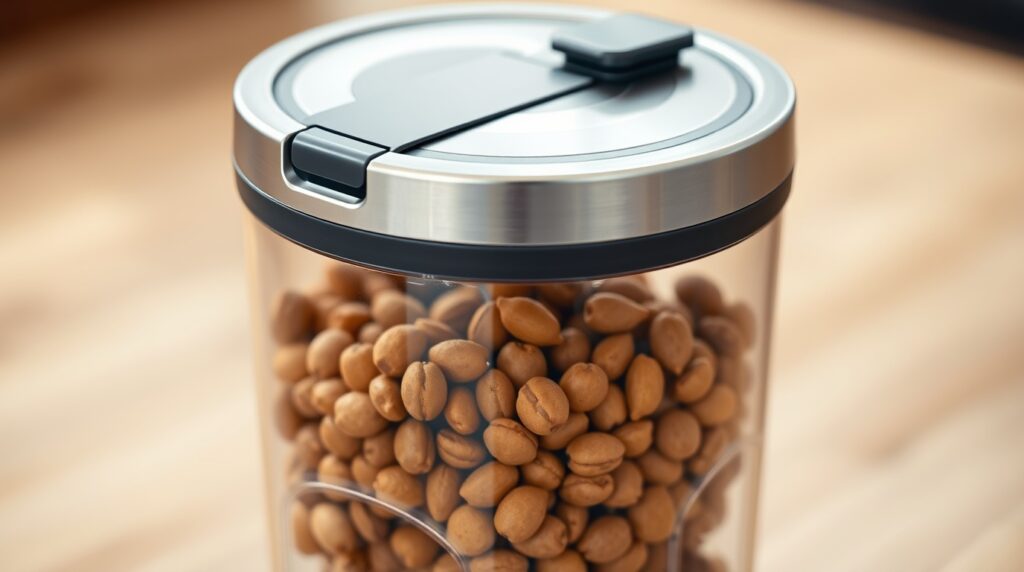
Plastic Cat Food Containers
Plastic containers are among the most popular options.
Pros
- Affordable
- Lightweight
- Available in many sizes
- Easy to move
Cons
- May absorb odors over time
- Can scratch with heavy use
Choose high-quality BPA-free plastic for best results.
Stainless Steel Cat Food Containers
Stainless steel offers premium food storage.
Pros
- Durable
- Odor resistant
- Easy to clean
- Attractive appearance
Cons
- More expensive
- Heavier than plastic
These containers are excellent for long-term use.
Stackable Storage Containers
Stackable designs help maximize space.
Benefits include:
- Better organization
- Small footprint
- Convenient storage
These are ideal for apartments and smaller homes.
Rolling Cat Food Containers
Larger containers often include wheels.
Advantages:
- Easy mobility
- Convenient access
- Ideal for heavy food bags
Rolling containers are popular among multi-cat households.
How Large Should a Cat Food Container Be?
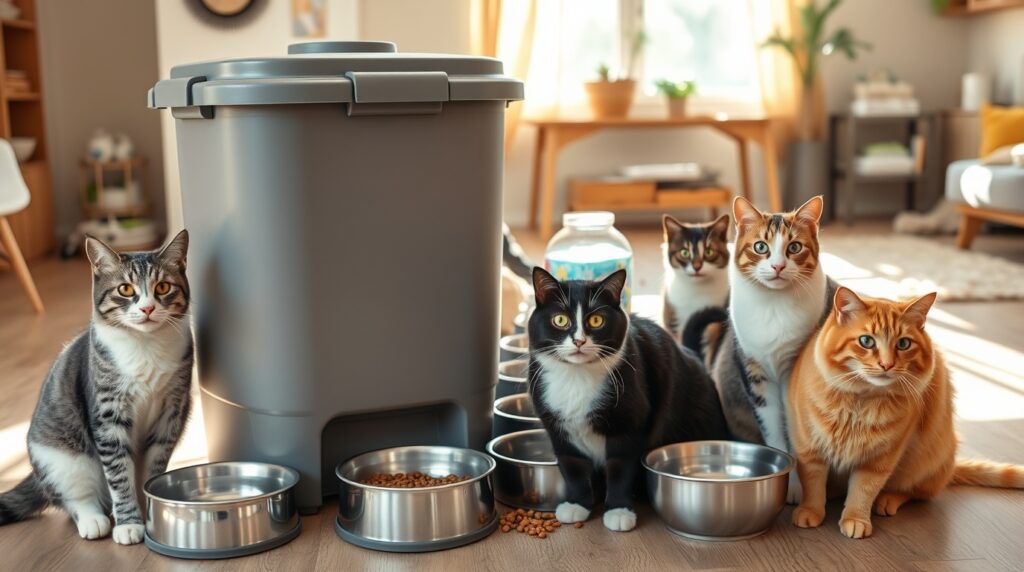
The ideal size depends on how much food you buy at one time.
| Food Bag Size | Recommended Container Size |
|---|---|
| 2–5 lbs | Small Container |
| 5–10 lbs | Medium Container |
| 10–20 lbs | Large Container |
| 20+ lbs | Extra Large Container |
Avoid choosing a container significantly larger than needed because excess air space may reduce freshness.
Should You Store Food Directly in the Container?
Many pet nutrition experts recommend placing the entire food bag inside the container rather than pouring kibble directly into it.
Benefits include:
- Preserves manufacturer information
- Retains lot numbers
- Maintains freshness
- Reduces oil buildup inside container
If space allows, keeping the original bag inside the storage container is often the best approach.
Best Location for Cat Food Storage
Even the best cat food container cannot protect food if stored improperly.
Ideal Storage Locations
Store containers in:
- Cool areas
- Dry locations
- Pantry shelves
- Utility rooms
Avoid These Locations
Do not store cat food:
- In direct sunlight
- Near ovens
- In garages with extreme temperatures
- Near humid laundry areas
Temperature stability helps preserve food quality.
Common Cat Food Storage Mistakes
Leaving Food in an Open Bag
This is one of the most common mistakes.
Open bags expose food to:
- Air
- Moisture
- Pests
Using Non-Food Storage Bins
Not all containers are food safe.
Always choose containers designed specifically for food storage.
Mixing Old and New Food
Adding fresh food to old leftovers can create freshness issues.
Instead:
- Finish existing food first
- Clean container thoroughly
- Add new food afterward
Forgetting Regular Cleaning
Food residue and oils can accumulate over time.
Clean containers regularly to maintain hygiene.
How Often Should You Clean a Cat Food Container?
Regular cleaning prevents bacteria buildup and odor retention.
Recommended Cleaning Schedule
| Container Type | Cleaning Frequency |
|---|---|
| Daily Scoop Area | Weekly |
| Main Container | Monthly |
| Full Deep Cleaning | Every Food Refill |
Wash with:
- Warm water
- Mild dish soap
- Thorough drying before refilling
Never refill a damp container.
Benefits of Using the Best Cat Food Container
Better Food Quality
Fresh food tastes better and retains more nutrients.
Reduced Waste
Proper storage prevents spoilage and waste.
Improved Organization
Containers keep feeding supplies neat and accessible.
Pest Prevention
Airtight storage helps protect food from insects and rodents.
Cost Savings
Bulk food purchases become safer when stored properly.
Best Cat Food Container for Multi-Cat Homes
Households with multiple cats often buy food in larger quantities.
Look for:
- Large capacity
- Wheels for mobility
- Durable construction
- Strong locking mechanisms
Multi-cat homes benefit most from high-capacity airtight storage systems.
Best Cat Food Container for Small Apartments
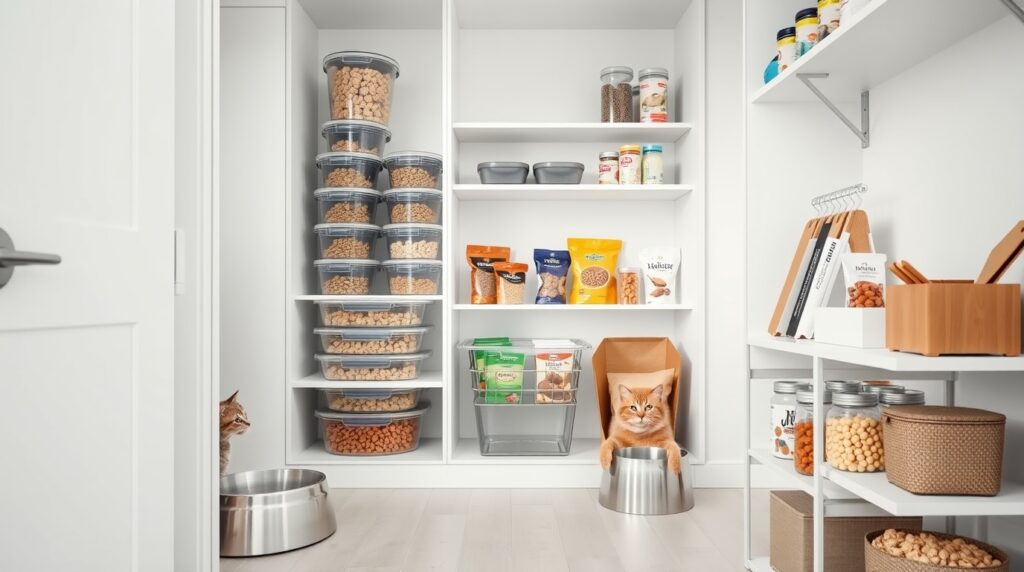
Space-saving designs are ideal for apartment living.
Features to prioritize:
- Compact footprint
- Stackable design
- Easy access lid
- Lightweight construction
Vertical storage options often work best in smaller spaces.
Signs Your Cat Food Is No Longer Fresh
Even when stored properly, food can eventually lose freshness.
Watch for:
- Unusual odor
- Color changes
- Mold growth
- Excessive crumbling
- Cat refusing food
Discard food immediately if contamination is suspected.
Dry Food vs Wet Food Storage
Storage requirements differ between dry and wet food.
Dry Food Storage
Store in:
- Airtight containers
- Cool locations
- Dry environments
Wet Food Storage
After opening:
- Refrigerate immediately
- Use within recommended timeframe
- Cover securely
Wet food requires more careful temperature control.
How to Extend Cat Food Shelf Life
Follow these tips to maximize freshness:
- Use airtight containers
- Avoid heat exposure
- Keep food dry
- Buy appropriate quantities
- Clean containers regularly
- Monitor expiration dates
Proper storage helps maintain nutritional quality throughout the food’s lifespan.
Frequently Asked Questions
What is the best material for a cat food container?
Food-grade BPA-free plastic and stainless steel are generally considered the best options.
Do airtight containers keep cat food fresh longer?
Yes. Airtight containers reduce exposure to oxygen and moisture, helping preserve freshness.
Can I store cat food in its original bag?
Yes. Many experts recommend placing the entire bag inside a storage container.
How long does dry cat food stay fresh after opening?
Most dry cat foods remain fresh for several weeks when stored properly in airtight conditions.
Are plastic cat food containers safe?
High-quality BPA-free food-grade plastic containers are generally safe for storing pet food.
Final Thoughts
Finding the best cat food container is a simple investment that can have a significant impact on your cat’s nutrition and food quality. A good container protects food from moisture, air, pests, and contamination while helping maintain freshness and flavor.
Whether you choose a BPA-free plastic container, a stainless steel option, or a stackable storage system, prioritize airtight seals, food-safe materials, and the appropriate size for your needs.
With proper storage practices and a high-quality cat food container, you can ensure your cat enjoys fresh, nutritious meals every day while reducing waste and improving organization around your home.
Also Read:
- Cat Feeding Schedule Template Free Printable: The Complete Guide for Healthy Cat Feeding
- How to Set Automatic Cat Feeder: A Complete Beginner’s Guide